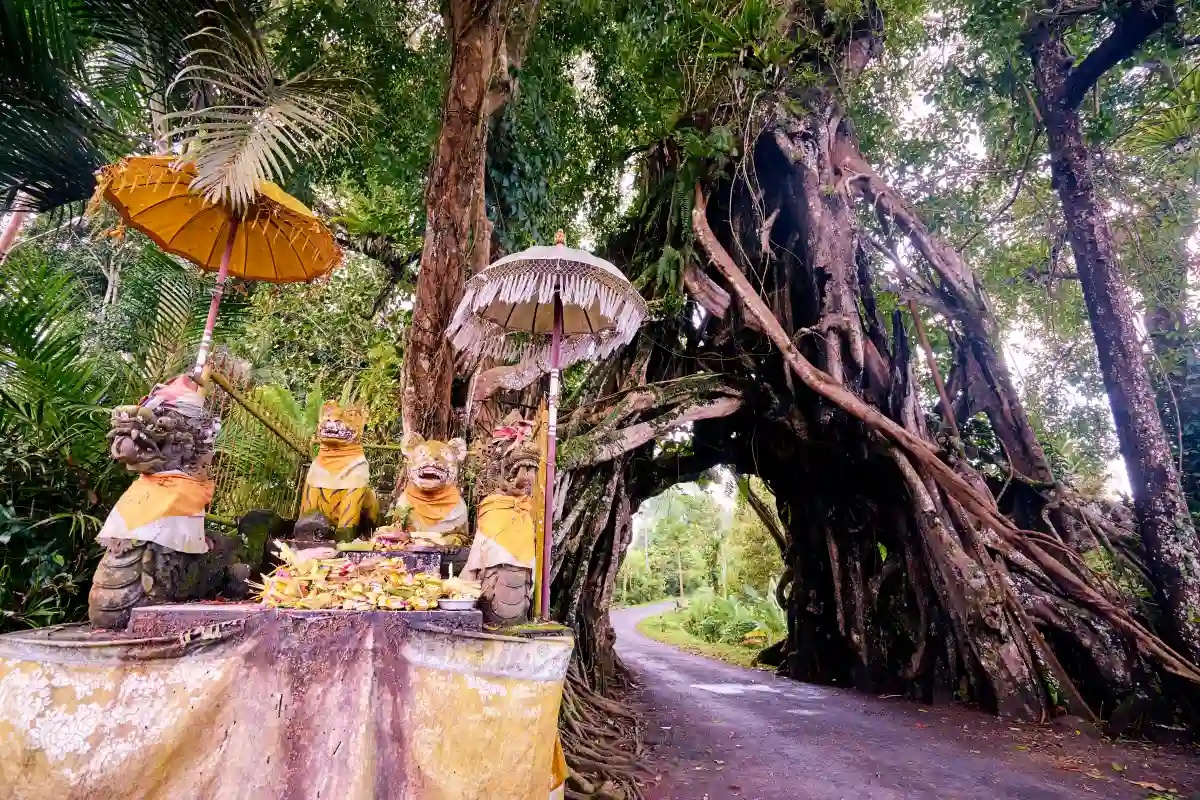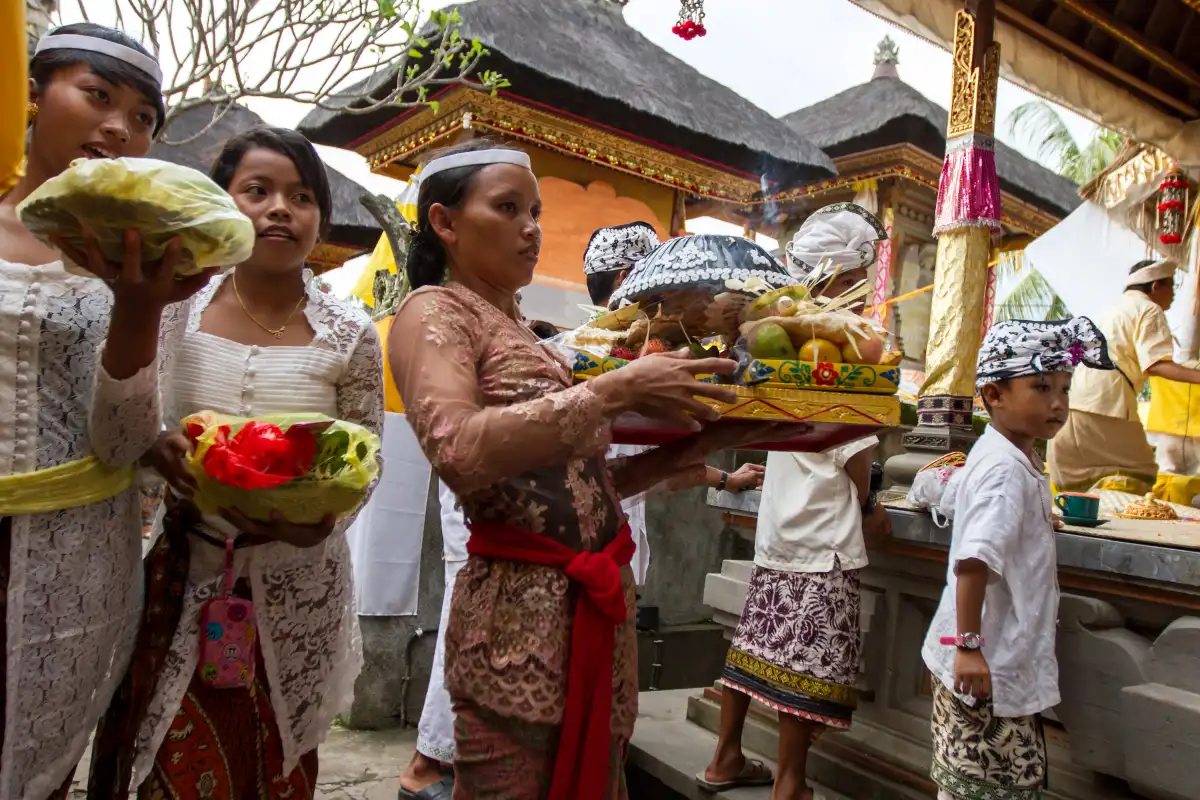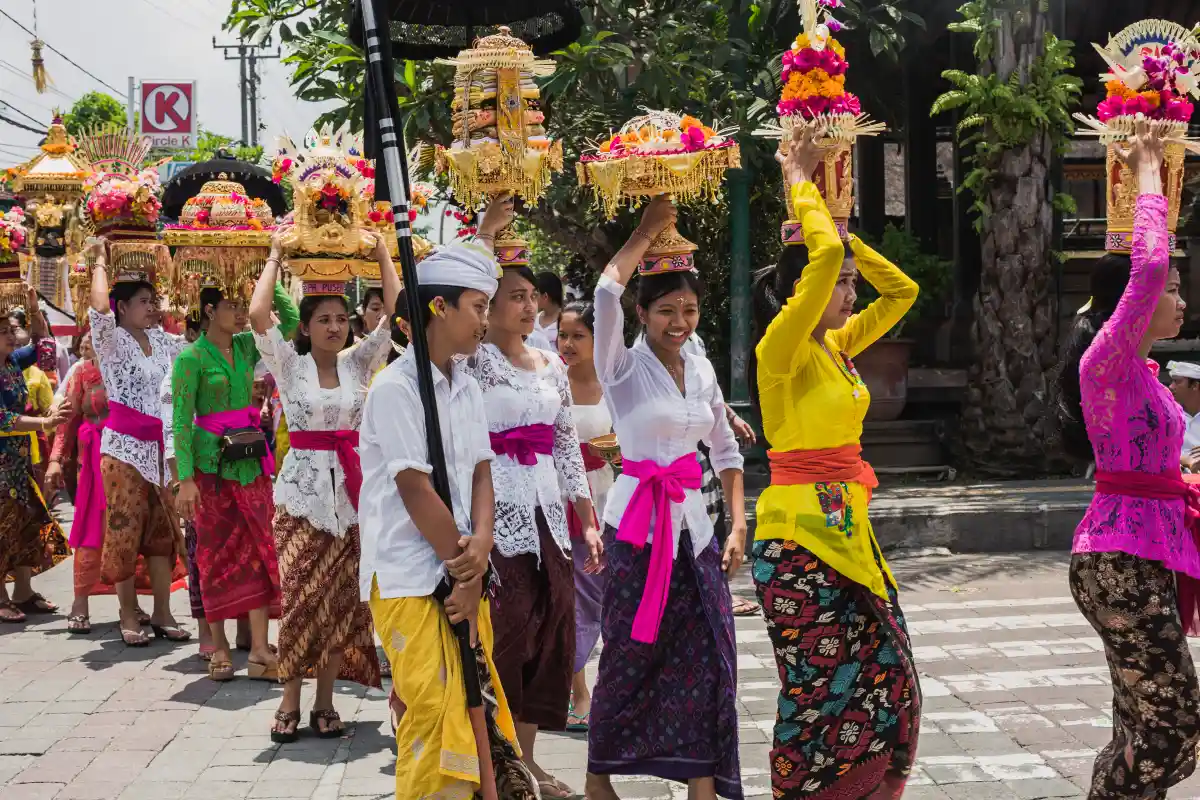
If you visit Bali and walk through almost any village in Bali, you’ll notice statues everywhere. They stand at temple entrances, line family compounds, overlook rice fields, and welcome visitors into homes and businesses. While many travellers admire their craftsmanship, Balinese statues are more than decorative works of art. They reflect centuries of religious belief, cultural tradition, and artistic knowledge that continue to shape everyday life on the island.
From hand-carved depictions of Hindu deities to mythical guardians protecting sacred spaces, every statue has a purpose. Understanding their meaning offers a deeper appreciation of Bali’s cultural heritage and the generations of artisans who continue to preserve these traditions.
Statue as Guardians of Sacred Spaces
Balinese statues are often placed at temples, family compounds, and traditional buildings as symbols of protection, guidance, and spiritual balance. Many can be found near Candi Bentar, the iconic split gateways that mark the transition from the outside world into a more sacred space. Some of the most common statues include:
Bedogol (Guardian Statues)
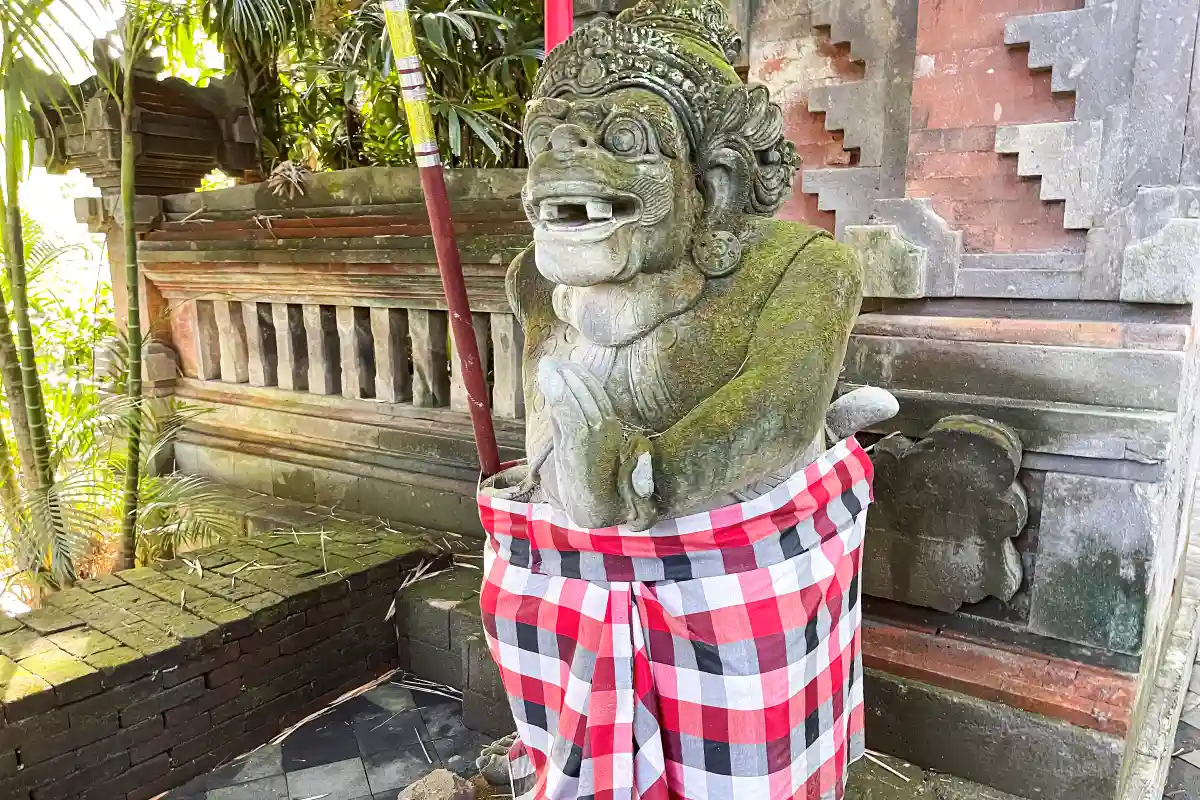
Usually positioned on either side of entrances, Bedogol statues are believed to protect temples, homes, and other sacred spaces from negative influences. Their presence also serves as a reminder to enter with respect and mindfulness.
Hindu Deity Statues
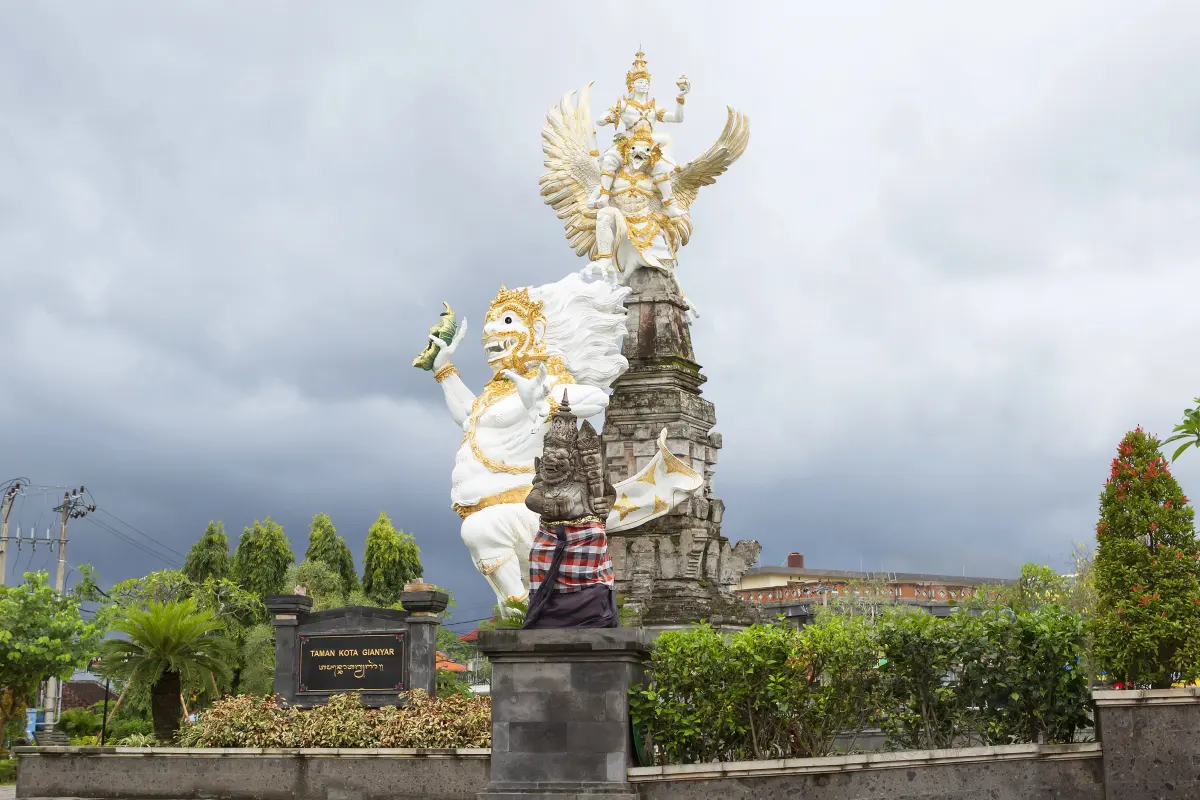
Figures such as Ganesha, Shiva, Vishnu, and Dewi Sri are commonly found in temples and family compounds. Each deity represents different values, including wisdom, protection, prosperity, and harmony.
Mythical Creatures
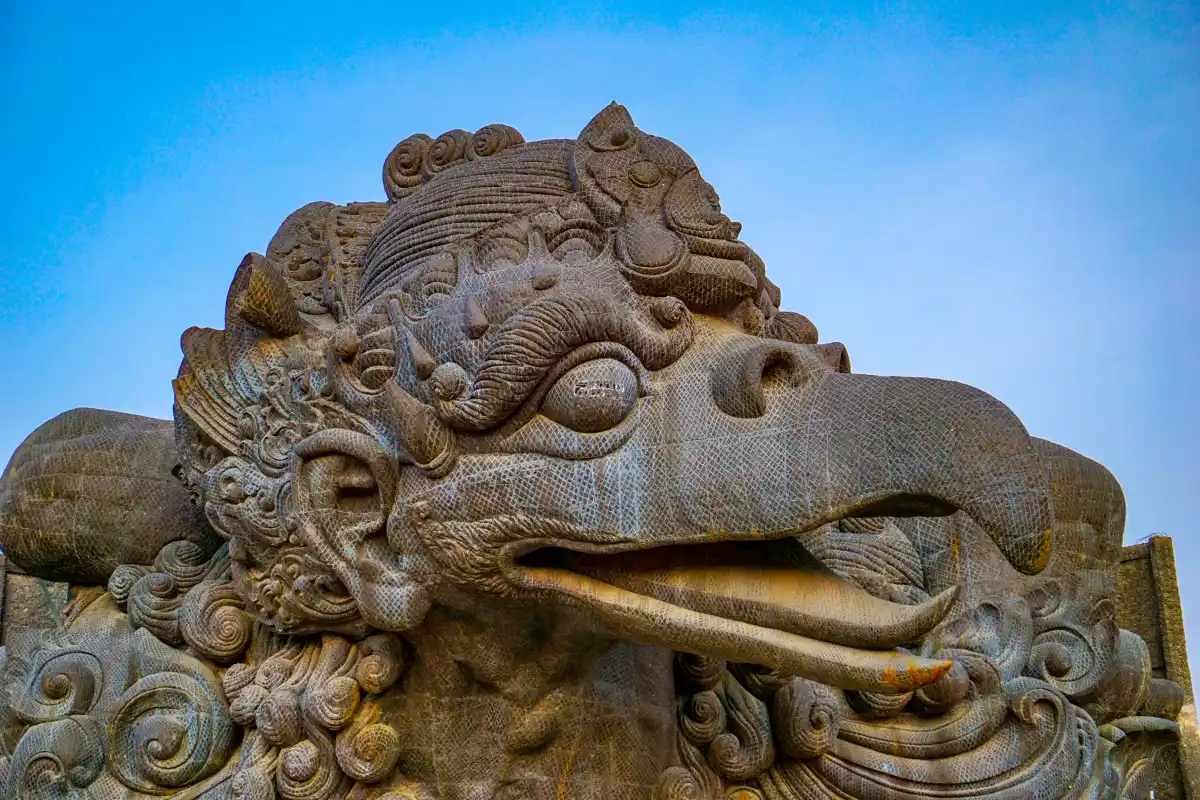
Dragons, lions, and other mythical beings are frequently carved into gateways, shrines, and temple walls. These figures symbolize strength, balance, and protection while reflecting stories from Hindu epics and Balinese folklore.
Many of these statues are wrapped in poleng, the distinctive black and white checkered cloth seen throughout Bali. In Balinese Hindu philosophy, poleng represents the balance of opposing forces, such as light and dark or good and bad. Rather than symbolizing conflict, it reflects the belief that harmony is achieved by maintaining balance in everyday life.
Read also: Balinese Wood Carving: The Ancient Art Form Keeping Bali’s Culture Alive
The Meaning Behind Balinese Statues
Every Balinese statue tells a story. Whether found in temples, family compounds, or traditional gardens, these carvings represent religious beliefs, cultural values, and characters from Balinese Hinduism. Some of the most common figures include:
Ganesha
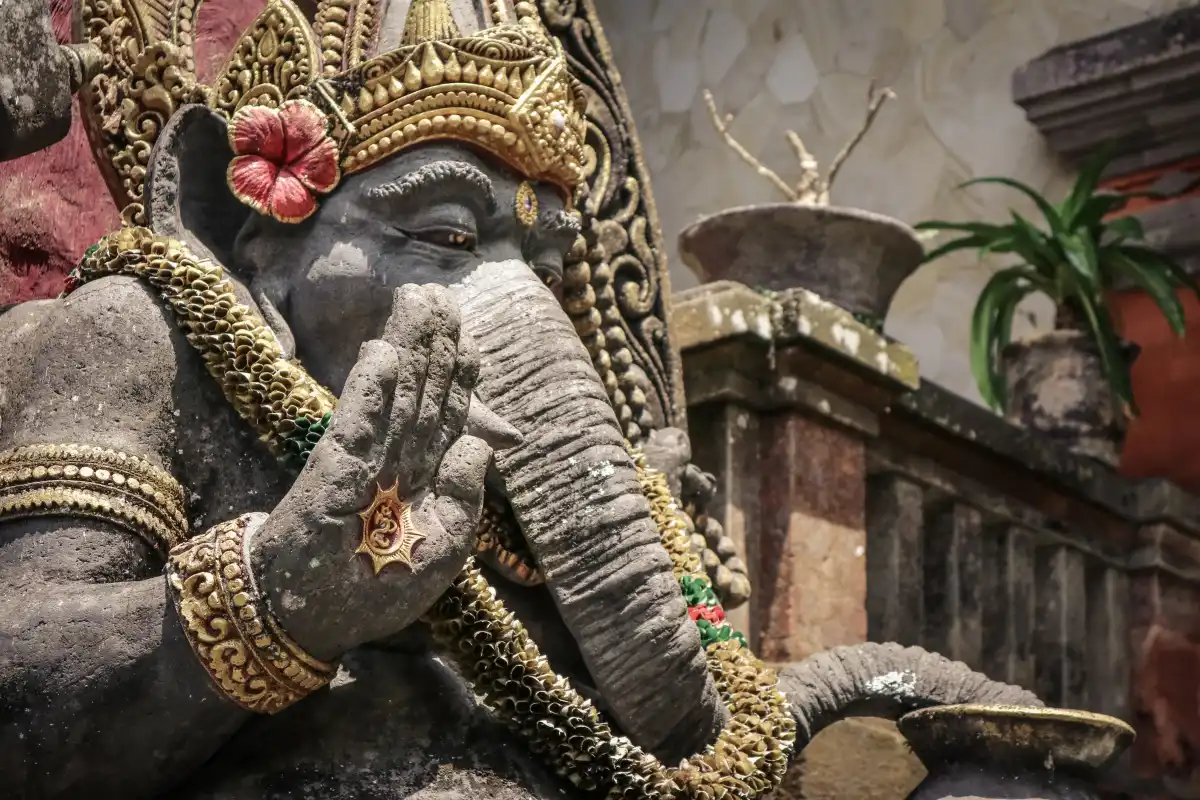
One of the most recognisable Balinese Hindu deity statues, Ganesha is the elephant-headed god of wisdom, knowledge, and new beginnings. A Ganesha statue Bali artisans create is often placed near entrances, schools, and places of learning as a symbol of protection and guidance.
Shiva
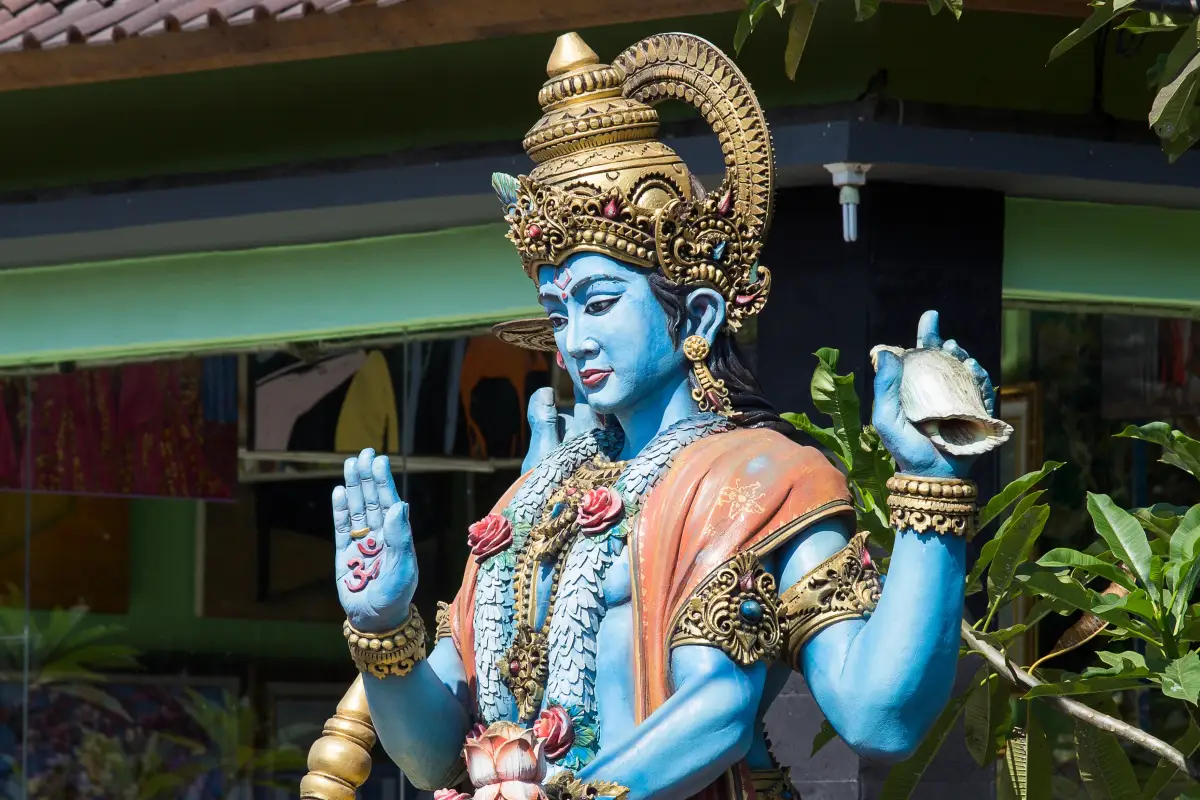
Known as the transformer in Hinduism, Shiva represents renewal, balance, and the continuous cycle of creation and change. His statues are commonly found in temples and sacred spaces.
Vishnu
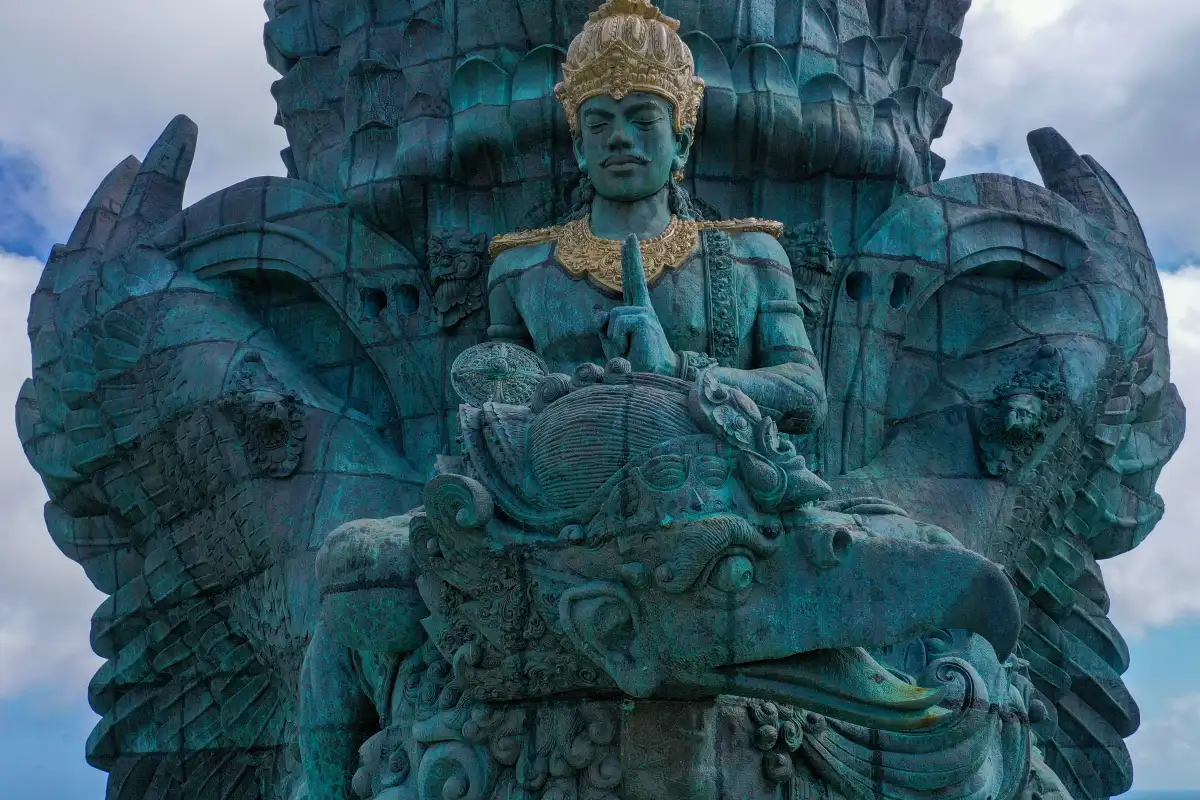
Vishnu is regarded as the protector and preserver of the universe. His statues symbolise stability, compassion, and the protection of life.
Dewi Sri
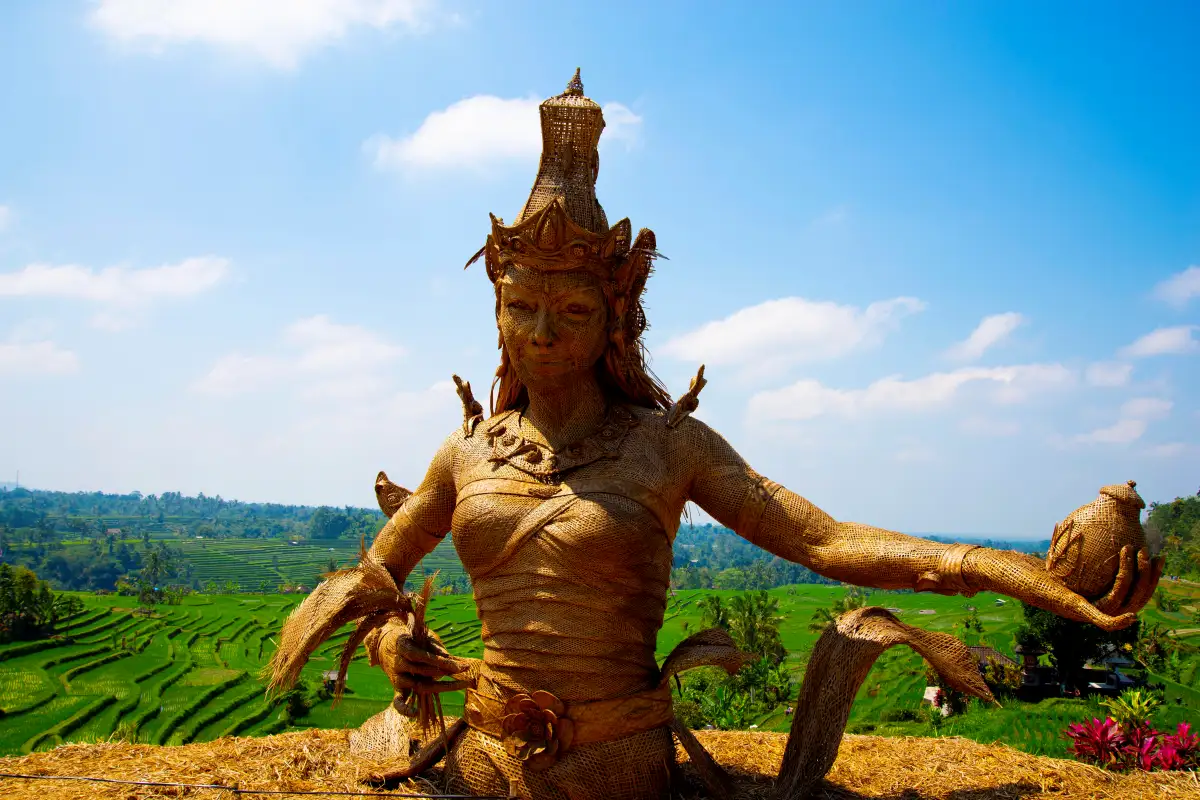
The Balinese goddess of rice and fertility, Dewi Sri is closely connected to agriculture and prosperity. Her presence reflects the importance of farming and the island’s long-standing relationship with nature.
Mythical Creatures
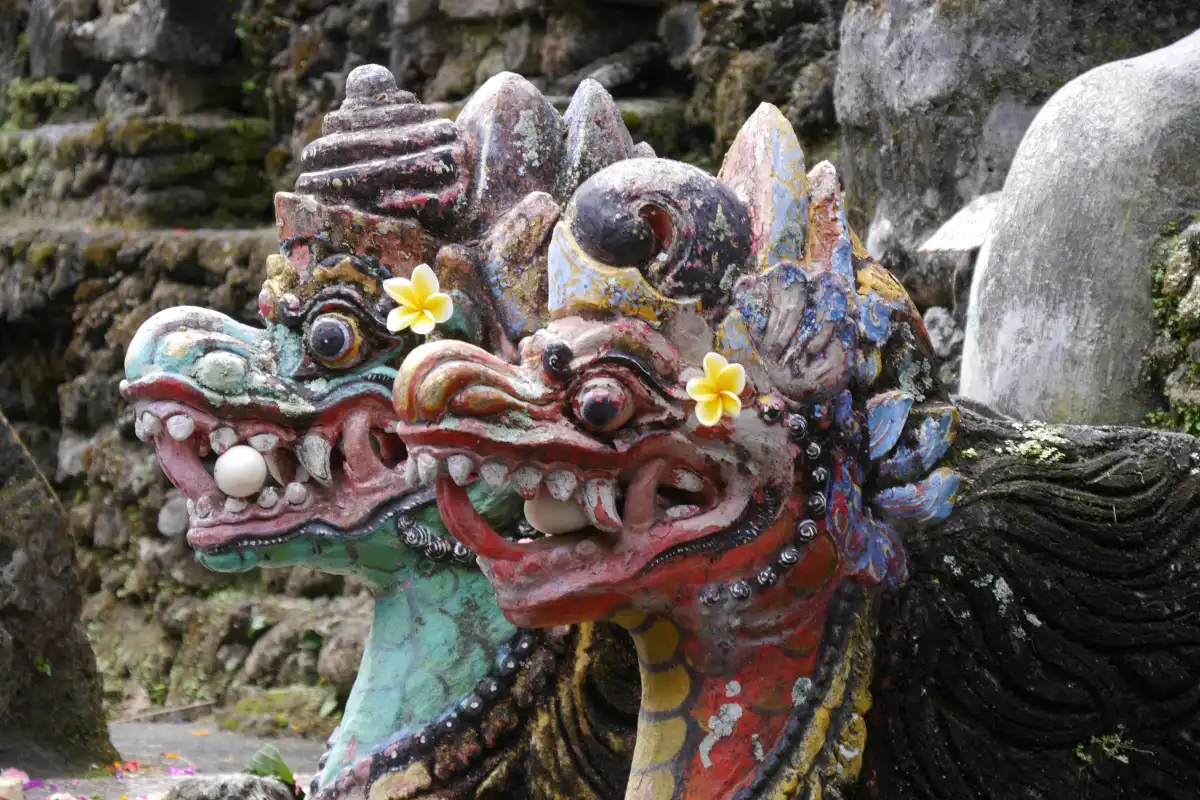
Dragons, lions, Garuda, and other mythical beings are commonly featured in Balinese statues. These figures are believed to guard sacred places, ward off negative influences, and represent courage, strength, and harmony.
Understanding the meaning behind these figures allows visitors to appreciate Balinese statues not only as works of art but also as expressions of the island’s spiritual and cultural heritage.
Read also: Bali Religion: Get to Know Balinese Hinduism & Cultural Traditions
From Limestone to Volcanic Stone
The materials used in Balinese stone carving have changed over time, shaped by both tradition and the island’s natural landscape. In villages such as Batubulan, artisans have long worked with paras stone, a soft limestone that makes it possible to carve intricate patterns and detailed figures by hand. Many of Bali’s temples, gateways, and traditional compounds feature carvings made from this material.
Today, volcanic stone from the slopes of Mount Batur and Mount Agung has become increasingly popular, especially for outdoor sculptures. Its durability makes it well suited for traditional Bali garden statues, temple restoration, and public spaces exposed to the elements.
Although the materials may differ, the craftsmanship remains rooted in the same carving traditions that have been practised in Bali for generations.
Balinese Statue is a Tradition Passed Between Generations
In many carving villages, learning begins at an early age. Young apprentices spend years observing master artisans before gradually developing the skills needed to create increasingly complex works.
This hands on approach has helped preserve Bali’s carving traditions for generations, particularly in communities such as Batubulan, where workshops continue to produce both ceremonial sculptures and contemporary commissions.
Today, however, many younger Balinese are choosing careers in tourism, hospitality, and technology. As a result, master artisans face the challenge of encouraging the next generation to continue these traditional crafts while adapting to changing economic opportunities. Supporting local workshops helps ensure this knowledge continues to be passed on rather than disappearing over time.
Buying Balinese Statues Responsibly
If you’re looking to bring home a Balinese statue, buying directly from the people who make it is one of the best ways to support local craftsmanship.
Throughout Batubulan and nearby villages, family-run workshops welcome visitors to see the carving process firsthand. Purchasing directly from these artisans not only provides a more authentic experience but also helps ensure that the income stays within the local community.
When choosing a statue, consider a few simple tips:
- Ask where the statue was carved and what material was used.
- Look for hand-carved details rather than identical factory-made designs.
- Choose statues made from responsibly sourced stone or wood.
- If you’re commissioning custom Balinese sculpture art, work directly with the artisan to discuss the design, materials, and timeline.
Choosing authentic craftsmanship helps preserve traditional carving techniques while supporting the families who have practised them for generations.
Read also: Local Markets in Bali: What to Buy, Where to Go, and How to Shop Like a Local
Discover Bali’s Living Craft Traditions
Behind every Balinese statue is a story of craftsmanship, cultural knowledge, and community. Visiting carving villages offers the chance to see these traditions firsthand while gaining a deeper understanding of the role sculpture continues to play in Balinese life.
For groups interested in exploring Bali’s artistic heritage, custom experiential learning programs can include visits to traditional carving villages, workshops with local artisans, and conversations about the relationship between art, religion, and community. Through Teen Exploration, University Experience, Adult Learning Journeys, and Customized CSR Group Programs, Bali Institute helps participants connect with Bali’s living traditions through meaningful local experiences.