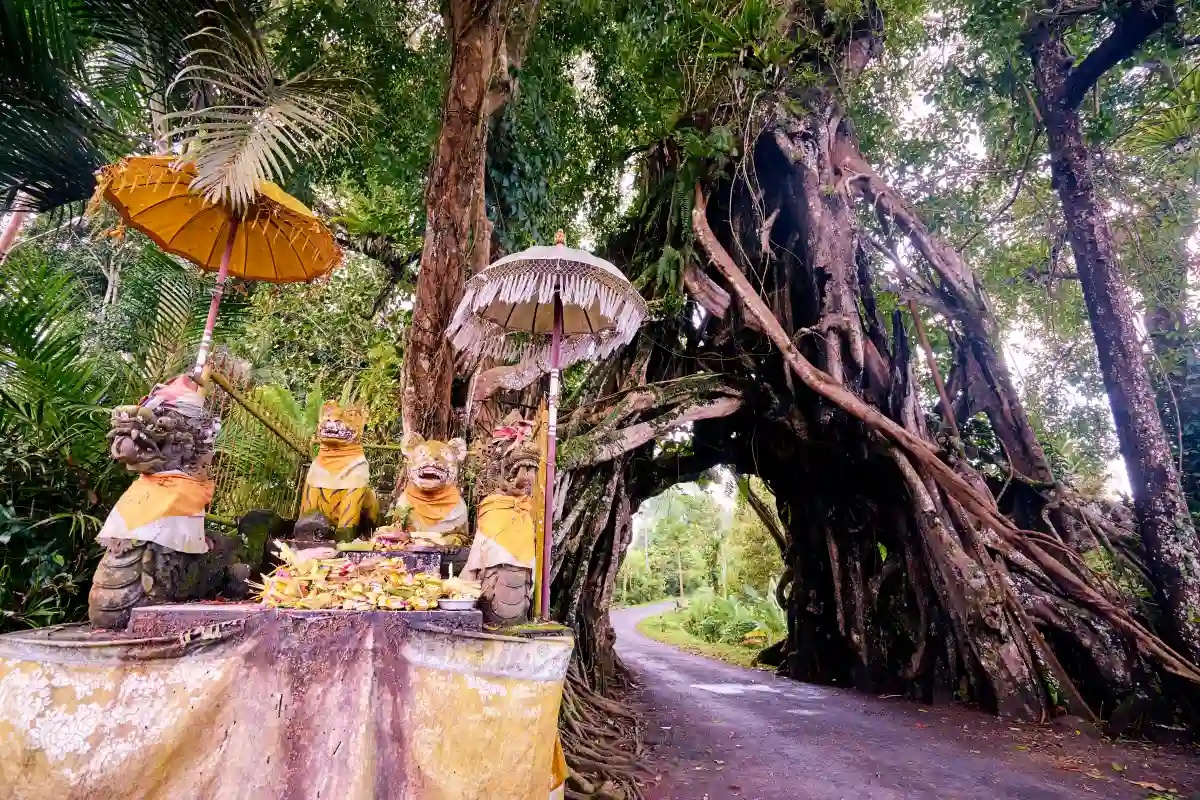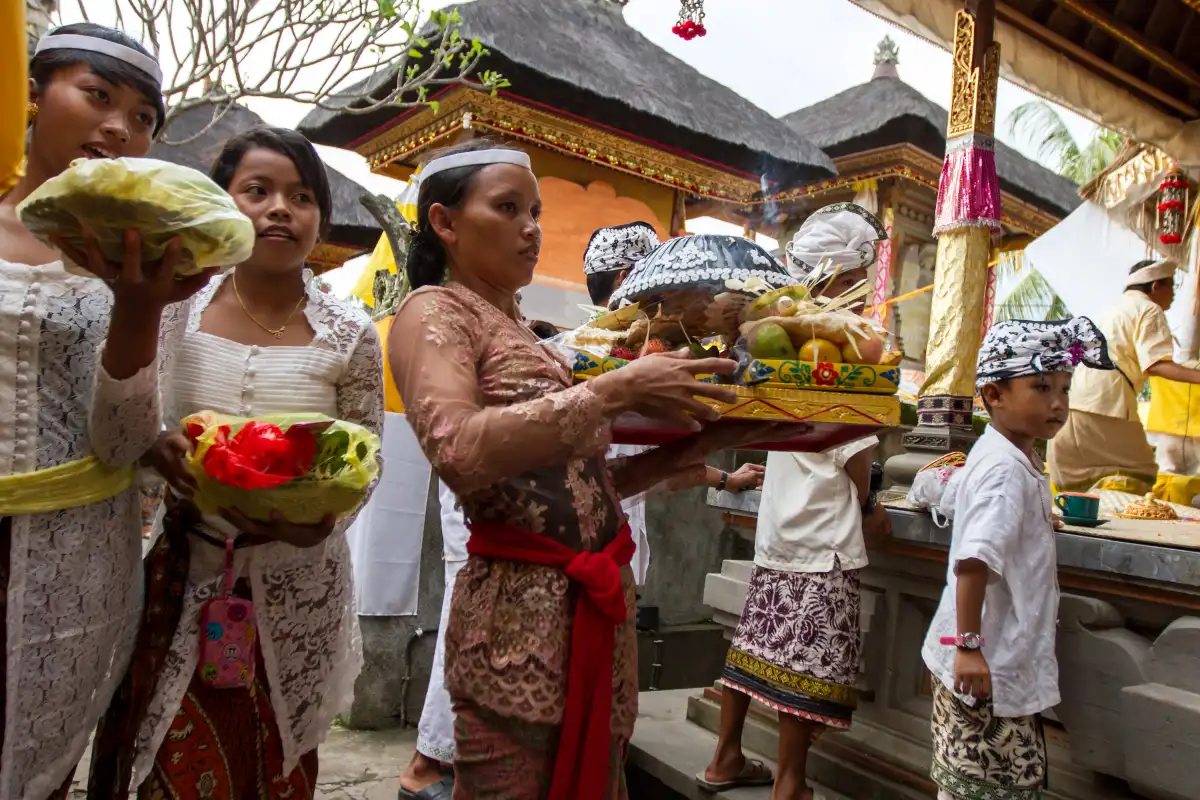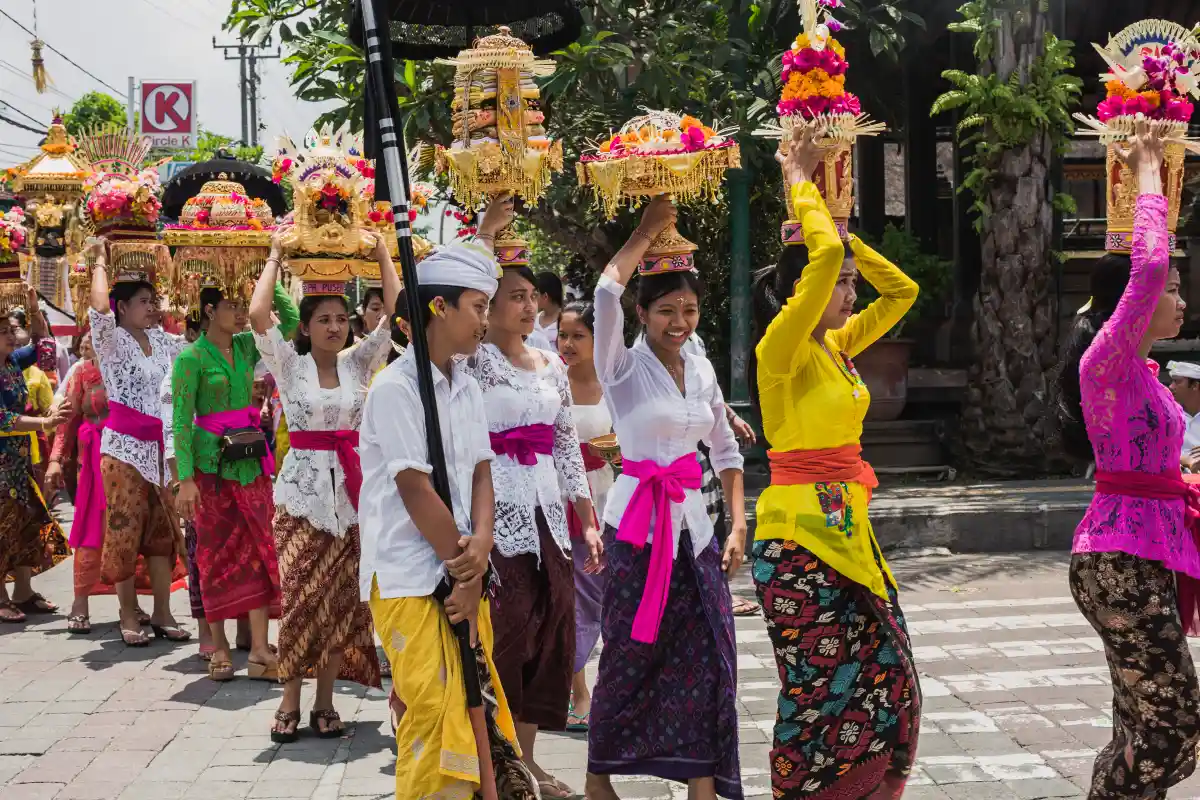
On the eastern shore of Lake Batur, surrounded by the volcanic landscape of Kintamani, Trunyan Village Bali offers a perspective on Balinese culture that differs from what many visitors encounter elsewhere on the island.
Trunyan is widely known for its distinctive burial traditions, particularly the practice known as mepasah. Yet reducing the village to its cemetery misses much of what makes Trunyan culturally significant. The community has its own customary systems, history, beliefs, relationship with the landscape, and cultural identity.
A visit to Trunyan Village can therefore be more than a stop at a cemetery. With appropriate local guidance and context, it can become an opportunity to understand cultural diversity within Bali and consider how traditions continue to function within a living community.
Where Is Trunyan Village?
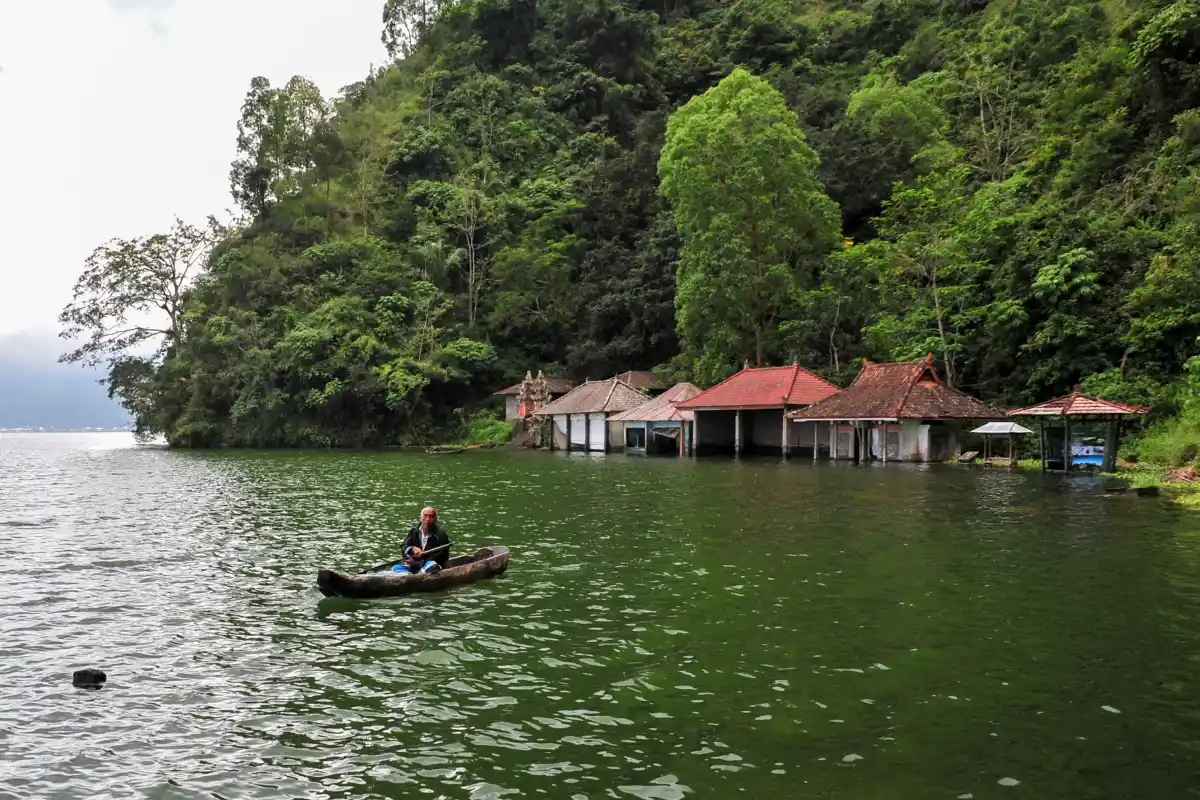
Trunyan is located in Kintamani, Bangli Regency, on the eastern side of Lake Batur. The village sits within the caldera landscape surrounding Mount Batur and is closely connected to the lake and the surrounding highlands.
The village is commonly accessed by boat across Lake Batur, with Kedisan among the access points used for trips to Trunyan. The journey across the lake also provides an introduction to the landscape in which the community has developed.
Its location is important to understanding Trunyan. The village is not simply a cultural attraction separated from its surroundings. The lake, mountains, agricultural landscape, settlement, and customary spaces all form part of the environment in which community life takes place.
Read also: Ulun Danu Beratan
Who Are the People of Trunyan?
Trunyan is associated with the Bali Aga, sometimes referred to as Bali Mula, communities that maintain cultural and customary traditions distinct from many other Balinese communities. The terms themselves require some care. Descriptions of Bali Aga as simply the “original Balinese” can oversimplify a much more complex history. Rather than viewing Trunyan as a community frozen in an earlier period, it is more useful to understand it as a living community whose traditions have developed and continued through changing social circumstances.
Local customary systems, religious practices, social organization, architecture, and relationships with ancestral traditions contribute to Trunyan’s distinct cultural identity. This distinction matters when visiting. Trunyan is not an open-air museum of an ancient Bali. People live, work, worship, and participate in contemporary life within the village.
Read also: Penglipuran Village
Why Is Trunyan Famous for Its Cemetery?
The Trunyan cemetery in Bali is best known for the practice of mepasah, a local mortuary tradition that differs from the cremation practices familiar in many other parts of Bali. In the mepasah tradition, certain deceased community members are placed above the ground within a designated cemetery area rather than being cremated or buried in the earth.
The body is placed beneath a bamboo structure known as an ancak saji. Importantly, this practice does not apply to everyone who dies in Trunyan. Local customary rules determine which people are eligible for mepasah. The cemetery, therefore, should not be understood as simply an unusual burial site. It forms part of a broader system of beliefs, rituals, social customs, and relationships between the community, the deceased, and sacred spaces.
Understanding the Taru Menyan Tree
The Taru Menyan tree is closely associated with Trunyan’s burial tradition and the village’s name. Local tradition connects taru with “tree” and menyan with fragrance. Local belief attributes an important role to the tree’s fragrance in the cemetery environment. Stories about Taru Menyan are also connected to the origin stories and cultural traditions of Trunyan.
These accounts are part of local belief and cultural history rather than something that should automatically be presented as a scientifically established explanation for what happens at the cemetery. That distinction is useful when learning about Trunyan culture. Local beliefs can be studied and respected as part of a community’s worldview without turning them into scientific claims.
Trunyan Has More Than One Burial Area
Descriptions of Trunyan burial traditions often focus on mepasah, but this is only one part of the community’s mortuary practices. Trunyan has three main cemetery areas, each associated with different customary circumstances.
Sema Wayah
Sema Wayah is the cemetery area most closely associated with mepasah, a practice in which certain deceased community members are placed above ground within a designated area. Eligibility depends on local customary rules and circumstances surrounding the person’s death.
Sema Nguda
Sema Nguda, also known as Sema Muda, is associated with children and people who have not married. The customs surrounding this area differ from those at Sema Wayah and are connected to the person’s age and social status.
Sema Bantas
Sema Bantas is associated with people whose deaths are considered unnatural, including deaths resulting from accidents or other circumstances. Burial is practiced here rather than the mepasah tradition associated with Sema Wayah.
These distinctions are important when learning about Trunyan burial traditions. The idea that everyone in Trunyan is placed above ground oversimplifies a more complex customary system, where different practices apply according to circumstances and community traditions.
The Taru Menyan Tree and the Story Behind Trunyan
Another feature closely associated with Trunyan culture is the Taru Menyan tree. The name is commonly explained through “Taru”, meaning tree, and “Menyan”, associated with fragrance. The tree is located in the cemetery area and is closely connected to local stories about the origins of the village and its burial traditions.
Local tradition holds that the tree’s fragrance helps counter the smell associated with decomposition. This is a cultural belief and should be presented as such rather than as an established scientific explanation. Different versions of the story also connect Taru Menyan with the origins of Trunyan and the community’s spiritual traditions.
The distinction between cultural belief and scientific fact is particularly important when discussing places such as Trunyan. Legends can be valuable sources of cultural knowledge without needing to be presented as literal historical or scientific explanations.
Read also: Balinese Hinduism
Trunyan Is More Than Its Cemetery
The cemetery is undoubtedly an important part of Trunyan’s cultural identity, but focusing only on death and burial can make the community seem much narrower than it is. Research on Trunyan has documented other aspects of community life and local knowledge, including ngayah, paruman, Mepasah, and the sacred Barong Brutuk tradition. These practices reflect relationships between community members, customary responsibilities, beliefs, and cultural continuity.
The surrounding landscape is also significant. Lake Batur is not simply the place visitors cross to reach the village. It forms part of the geographical setting in which the community has developed its history and relationship with the environment.
This makes Trunyan relevant to subjects such as anthropology, sociology, religious studies, environmental studies, cultural heritage, and tourism. A visit can raise questions about how communities maintain traditions, how landscapes become culturally meaningful, and how tourism changes the way outsiders encounter local practices.
What Can Visitors Learn From Trunyan Culture?
A visit to Trunyan can become more meaningful when the focus moves beyond simply seeing something unusual. Several questions can help put the experience into context:
- How does geography influence the development of a community?
- How are customary rules passed between generations?
- Why can different communities in the same island have different traditions?
- How do religious beliefs and local knowledge influence practices surrounding death?
- How can communities maintain cultural identity while adapting to contemporary life?
- What responsibilities do visitors have when entering culturally and spiritually significant spaces?
These questions also make Trunyan Bali relevant to experiential learning. Students studying anthropology, cultural studies, tourism, or environmental humanities can use the village as a case study in cultural continuity, local knowledge, and the ethics of observation.
The educational value does not come simply from visiting a cemetery. Context, local perspectives, respectful observation, and reflection are what can turn a cultural visit into a meaningful learning experience.
Read also: Tri Hita Karana
Responsible Cultural Tourism in Trunyan
The cemetery areas in Trunyan are culturally and spiritually significant spaces. Visitors should therefore approach them differently from ordinary tourist attractions.
A responsible visit should include:
- Follow local guidance. A local guide can provide cultural context and explain rules that may not be obvious to visitors.
- Dress respectfully. Appropriate clothing is important when entering a traditional community and culturally significant areas.
- Ask before taking photographs. Do not assume that people, ceremonies, sacred objects, or cemetery areas can be photographed freely.
- Respect restricted areas. Some spaces may have rules that limit access, and those rules should be followed.
- Do not touch or move anything. Objects, structures, and remains within the cemetery should be treated with respect.
- Avoid sensationalizing the experience. Burial traditions should not be treated as entertainment, a horror attraction, or a photo opportunity.
- Listen to local explanations. Community perspectives provide context that cannot be understood from photographs or online descriptions alone.
Official tourism guidance also recommends using local guides, asking permission before taking photographs, behaving respectfully, and following instructions within the village and cemetery areas.
Responsible cultural tourism means recognizing that Trunyan is a living community. The people whose traditions visitors come to learn about are not part of an exhibition. They continue to live, work, practice their beliefs, and make decisions about their community today.
Read also: Regenerative Tourism in Bali
Trunyan as an Experiential Learning Destination
Trunyan Village Bali can provide a valuable setting for experiential learning because it brings cultural concepts into a real-world environment. Students can explore anthropology through local customs, environmental studies through the relationship between community and landscape, and tourism studies through questions about cultural representation and visitor behavior.
The village also provides an opportunity to discuss the difference between observing a tradition and understanding it. A photograph of a cemetery may show what something looks like, but it cannot explain why a community practices it, how the practice fits into its wider belief system, or how local people understand their own traditions.
That deeper context is particularly important when studying cultural heritage. Research on Trunyan shows that local traditions continue alongside changes brought by contemporary life, demonstrating that cultural continuity can involve both preservation and adaptation.
Why Trunyan Matters Within Bali’s Cultural Diversity
Bali is often presented as though it has one single, uniform culture. Trunyan offers a useful reminder that Balinese communities can have distinct histories, customary systems, rituals, and social practices.
Learning about Bali Aga Trunyan therefore does not simply mean learning about an unusual burial tradition. It means looking at how one community has developed and maintained its own cultural identity within the wider island of Bali.
That perspective makes a visit to Trunyan more than a stop at a famous cemetery. It becomes an opportunity to understand cultural diversity, local knowledge, the relationship between people and landscape, and the responsibilities that come with cultural tourism.
Read also: Experiential Education in Bali
Visiting Trunyan With Respect
Trunyan is often introduced through its most visually striking tradition, but the village deserves a broader introduction. Its location beside Lake Batur, its customary systems, its history, and its continuing community life all form part of the story. Understanding the Trunyan burial tradition requires more than knowing what happens at the cemetery. It means learning why different practices exist, listening to local perspectives, and recognizing the cultural and spiritual context surrounding them.
A respectful visit to Trunyan can offer valuable insight into Bali’s cultural diversity, community traditions, and the relationship between people and place. For students, educators, and groups seeking a deeper understanding of the island, Bali Institute’s programs connect participants with local communities, cultural traditions, and environmental contexts across the island. turning places like Trunyan into meaningful settings for experiential learning rather than simply destinations to visit.