Penglipuran Village is often recognized for its traditional houses, bamboo forests, and famously clean streets. But its cultural significance goes deeper than its appearance. The village is also an example of how desa adat, customary law, community decision-making, and traditional spatial planning continue to shape life in Bali.
Located in Bangli Regency, Penglipuran has maintained many of its traditional practices while welcoming visitors from around the world. Its approach offers valuable lessons about cultural preservation and sustainable tourism.
Traditional Village Governance in Penglipuran
At the heart of Penglipuran’s community is the desa adat, or traditional village institution. It plays an important role in managing cultural, social, religious, and communal affairs. Village decisions are guided by customary leadership and collective participation.
Rather than relying only on modern administrative systems, the community continues to use traditional structures to maintain village identity and manage shared responsibilities. This community-based approach is also reflected in tourism. Residents participate in tourism activities while the village continues to protect its cultural traditions and local way of life.
Read also: What Is a Balinese Banjar? The Community System Behind Daily Life in Bali
Awig – awig: Customary Law in Daily Life
Penglipuran’s traditional governance is supported by awig-awig, a set of customary rules that guide community behavior. Awig-awig includes both written and unwritten traditions developed and agreed upon by the community. These rules can influence social relationships, environmental management, cultural practices, and the use of village spaces.
The rules also help protect the village from development that could threaten its identity. For example, customary regulations limit the transfer of traditional village land to outsiders, helping the community maintain control over its cultural landscape. This shows how customary law can remain relevant in modern Bali, not simply as something inherited from the past, but as a system that continues to guide community life.
Read also: Tenganan Village Bali: Where Ancient Traditions Continue to Shape Daily Life
Traditional Planning and the Bamboo Landscape
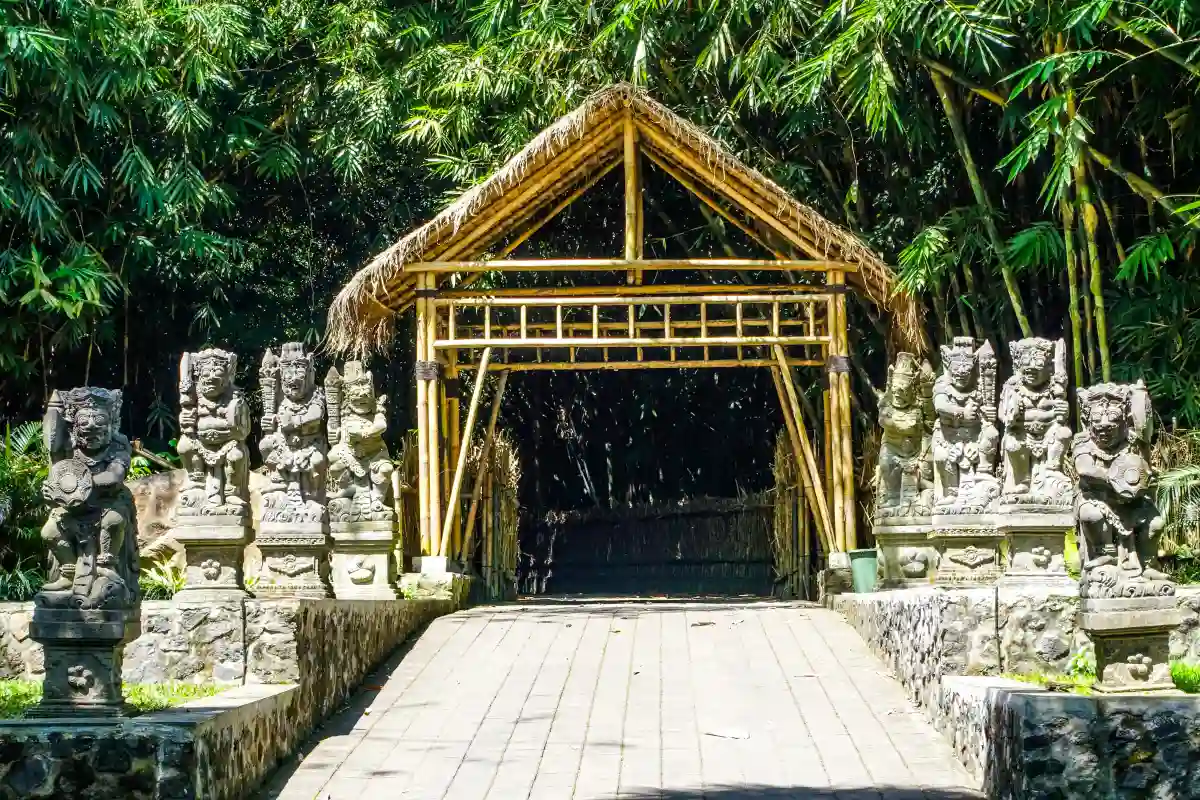
Penglipuran’s physical layout reflects Balinese concepts of spatial organization. The village follows the Tri Mandala principle, organizing spaces according to their different cultural and religious functions. Traditional houses are arranged along a central pathway, creating the orderly appearance Penglipuran is known for. Sacred areas, residential spaces, and other village functions are organized within this larger structure.
The surrounding bamboo forest is another important part of the landscape. Bamboo covers a significant portion of the village and has long been connected to local resources, architecture, and environmental identity. Together, the village layout and bamboo landscape show how culture and environmental management can be closely connected.
Read also: Inside a Bali Architecture Tour: Explore the Island’s Timeless Design Philosophy
What Penglipuran Teaches Us About Sustainable Tourism
Penglipuran demonstrates that sustainable tourism is not only about keeping a destination clean or protecting natural resources. It can also mean protecting:
- Local decision-making
- Customary laws and traditions
- Community ownership and participation
- Traditional architecture and spatial planning
- Natural landscapes
- The everyday life of local residents
As tourism continues to grow, maintaining a balance between visitors and community life becomes increasingly important. Research on Penglipuran highlights the need to protect residential and sacred spaces while managing increasing visitor numbers.
Read also: Regenerative Tourism in Bali: Simple Ways to Participate
Visiting Penglipuran Respectfully
Penglipuran is a living community, not simply a cultural attraction. Visitors can help preserve its character by following a few simple practices:
- Stay on designated visitor paths.
- Don’t enter private homes or compounds without permission.
- Ask before photographing residents.
- Keep the village clean.
- Respect sacred spaces and local rules.
- Remember that residents’ daily lives continue alongside tourism.
Being a respectful visitor is one small way to support the community traditions that make Penglipuran special.
Learn from Balinese Traditional Communities with Bali Institute
Penglipuran offers more than a glimpse into traditional Balinese architecture. Its desa adat, customary law, community decision-making, and approach to protecting cultural landscapes provide a real-world opportunity to explore how communities preserve identity while adapting to modern tourism.
At Bali Institute, we design immersive educational experiences that connect academic learning with Bali’s communities, traditions, and contemporary challenges. Penglipuran can become a living classroom for exploring anthropology, cultural preservation, sustainable tourism, community development, and traditional governance.
Whether you’re planning a Teen Exploration program focused on cultural awareness, a University Experience exploring anthropology and sustainable development, an Adult Learning Journey, or a Customized CSR Group Tour, our programs can be tailored to your learning goals. Ready to experience Bali as a living classroom? Connect with Bali Institute to start planning your educational journey.