When we talk about Bali, beaches often come to mind first. Yet to truly understand the island’s soul, we must look inland and upward. Mountains hold a central place in Hindu Bali, shaping spiritual beliefs, daily routines, village layouts, and temple architecture. For cultural travelers, students, and curious visitors, understanding the importance of mountains in Hindu Bali opens a deeper appreciation of how religion, nature, and everyday life are inseparable on this island.
In this guide, we explore why mountains are sacred, the key concepts visitors should know, and how these beliefs influence behavior, ceremonies, and sacred spaces across Bali.
Read also: Discovering Bali’s Culture and Traditions: A Deep Dive with Bali Institute
Why mountains are sacred in Balinese Hindu tradition
In Balinese Hinduism, mountains are seen as the dwelling place of the gods and ancestral spirits. We understand mountains as the highest and purest points of the island, acting as a spiritual axis that connects the human world with the divine realm. This belief is rooted in ancient Hindu cosmology, where elevation symbolizes closeness to holiness and spiritual refinement.
Mountains are also viewed as sources of life. They provide water, fertile soil, and balance to the ecosystem. Because of this, reverence for mountains is not abstract theology but a lived value that influences how people orient their homes, conduct rituals, and move through sacred spaces.
Key concepts visitors should know
To grasp the importance of mountains in Hindu Bali, there are a few foundational ideas that help decode what we see on the ground.
Kaja kelod toward mountains vs toward sea
Kaja refers to the direction toward the mountains, while kelod points toward the sea. We can think of kaja as spiritually pure and kelod as more worldly. This directional concept is not about north or south in a strict geographic sense but about spiritual orientation.
In daily life, important structures such as family shrines, village temples, and ceremonial spaces are positioned facing kaja. Activities associated with cleansing or disposal are more often aligned toward kelod. Understanding kaja kelod helps visitors move respectfully within temples and villages.
Sacred vs worldly space explained simply
Balinese space is divided into sacred and more ordinary zones. We see this clearly in temple courtyards, which move from outer public areas to inner sacred spaces as one approaches the mountain direction. This hierarchy reflects a spiritual journey from the everyday world toward divine presence.
For visitors, this means that not every space is meant to be entered casually. Some areas are reserved for prayer and ritual, and awareness of spatial boundaries is a form of respect.
Read also: Balinese Hinduism – The Heart of Bali’s Spiritual Soul
How mountains influence temple placement and architecture
Temple placement in Bali is never random. We notice that major temples are built facing mountains, with Mount Agung serving as the primary spiritual reference point. Roof tiers, courtyard layouts, and gateways all reflect the belief that spiritual energy flows from the mountains down toward the sea.
Even village temples and household shrines follow this logic on a smaller scale. Architecture becomes a physical expression of belief, translating cosmology into wood, stone, and orientation.
Mount Agung’s cultural significance
Mount Agung is the most sacred mountain in Bali. We regard it as the axis of the island’s spiritual geography. Pura Besakih, known as the Mother Temple, sits on its slopes and serves as the most important temple complex in Balinese Hinduism.
Mount Agung is not just a backdrop but an active presence in rituals, calendars, and collective identity. When ceremonies are planned, directions toward Mount Agung are carefully observed. Even when the volcano is quiet or active, reverence remains constant.
Mountains in ceremonies and offerings
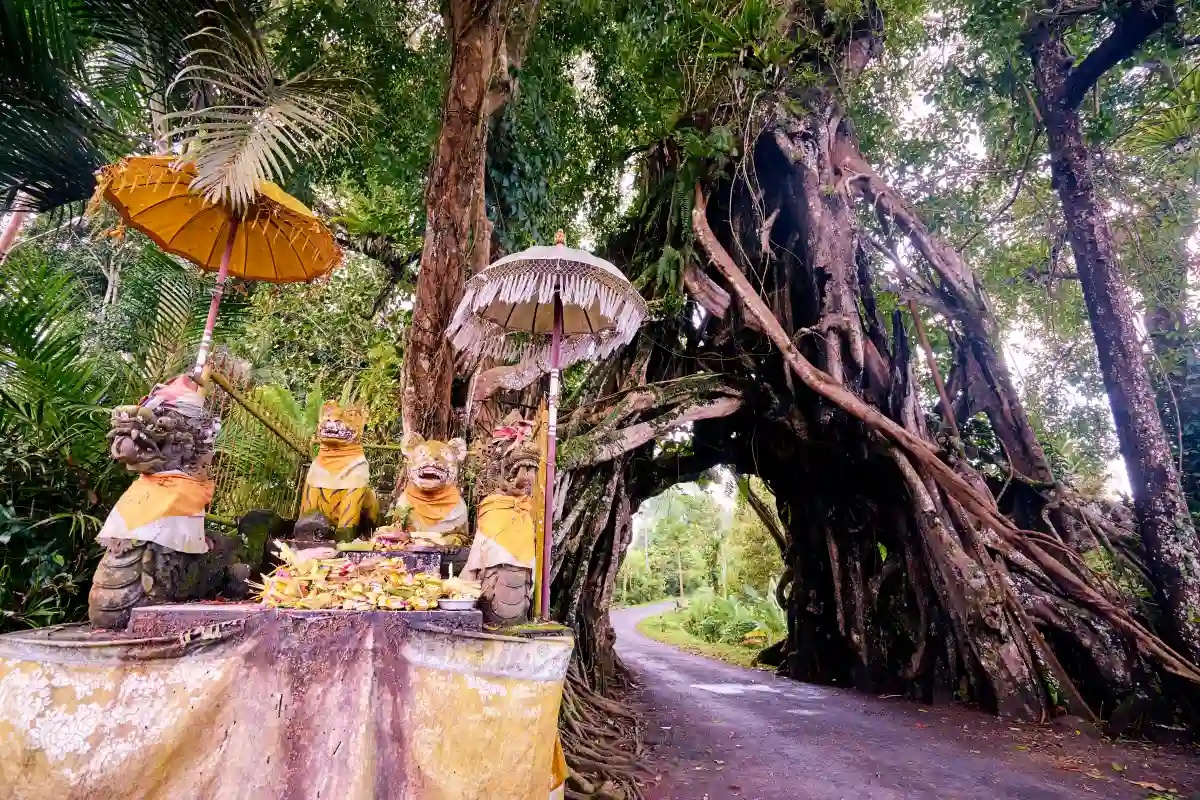
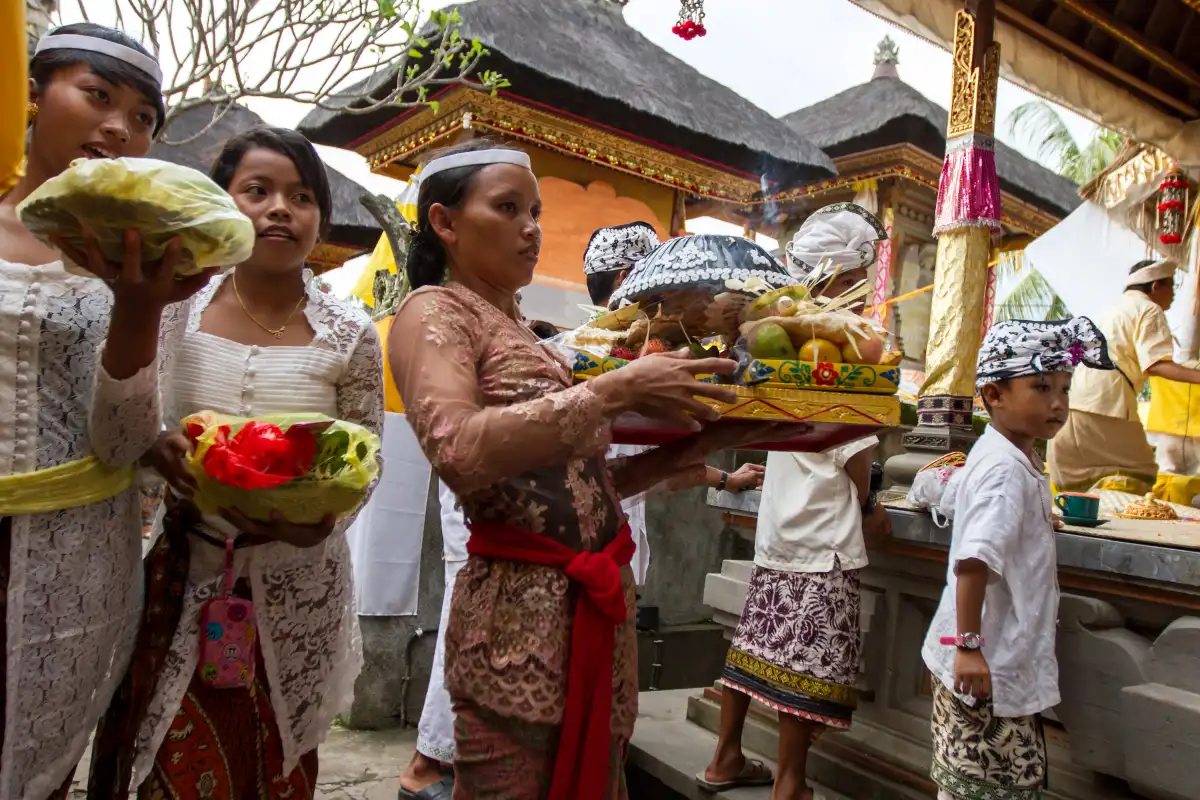
Mountains play a key role in Balinese ceremonies and offerings. We see offerings prepared with the intention of maintaining harmony between humans, nature, and the gods. Many rituals symbolically send prayers upward toward the mountains, acknowledging them as channels of divine energy.
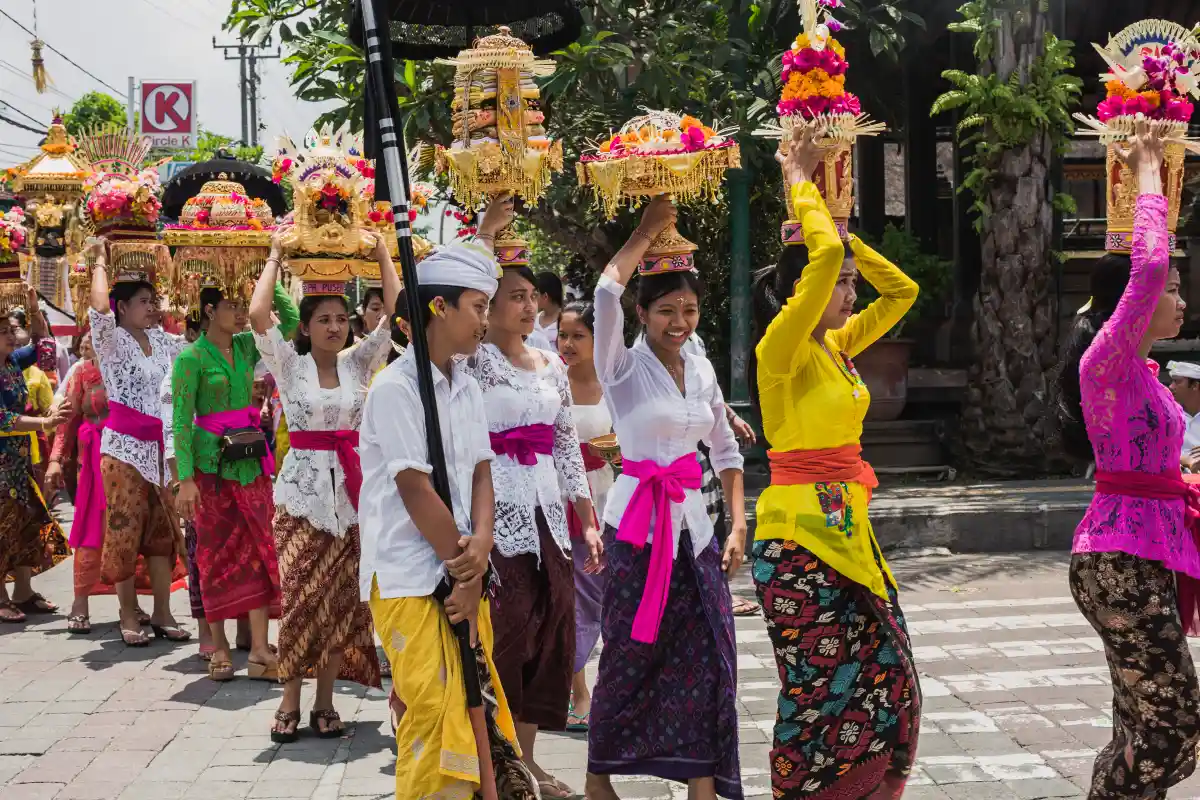
Major ceremonies often align timing, procession routes, and prayer orientation with mountain directions. This reinforces the idea that spirituality in Bali is spatial, embodied, and communal.
Read also: Bali Offerings : Canang Sari, Significance & Meanings
What travelers should do differently because of this
Understanding the importance of mountains in Hindu Bali should shape how we behave as visitors.
We should pay attention to temple orientation and follow guides or signage that indicate appropriate movement. We should avoid standing higher than priests during ceremonies, walking carelessly through prayer lines, or positioning ourselves in ways that block sacred directions.
Respectful behavior is not about strict rules but about awareness. When we move with sensitivity, we participate in preserving the spiritual atmosphere that locals work hard to maintain.
Cultural sites and viewpoints to experience respectfully
There are many places where we can appreciate Bali’s mountain spirituality without disruption. Temple complexes near Mount Agung, highland villages, and scenic viewpoints offer opportunities to observe how belief and landscape interact.
When visiting, we recommend dressing appropriately, observing quietly, and asking questions through knowledgeable local guides. This approach turns sightseeing into genuine cultural learning.
Frequently Asked Questions
Why is Mount Agung considered sacred?
Mount Agung is believed to be the dwelling place of the gods and the spiritual center of Bali. It anchors the island’s religious orientation and hosts Pura Besakih, the most important temple complex in Balinese Hinduism.
What does kaja kelod mean?
Kaja means toward the mountains and symbolizes sacredness. Kelod means toward the sea and represents the more worldly realm. This concept guides spatial orientation in temples, villages, and homes.
How do mountains influence Balinese temples?
Mountains determine temple direction, layout, and hierarchy. Most temples face toward the mountains, especially Mount Agung, reflecting the flow of spiritual energy from the divine to the human world.
Experience Sacred Landscapes with Bali Institute
Reading about Balinese spirituality is one thing; witnessing it is another. At Bali Institute, we design immersive programs that move beyond sightseeing into deep cultural understanding. We don’t just show you a mountain; we explore the ecosystem of belief that surrounds it.
Whether it’s Teen Exploration programs for students seeking adventure and learning, University Experience programs that bring academic study into real-world contexts, Adult Learning Journey programs for communities looking to immerse in a cultural infused itinerary, or CSR-focused excursions for companies looking to make an ESG-aligned impact, Bali Institute offer a deeper, more educational way to explore Bali while supporting local communities and conservation efforts.
Join us to see Bali not just as a destination, but as a living classroom where nature and spirit are one.