When people think about Bali, their first images may be beaches, temples, rice terraces, and the busy tourism areas of the south. Singaraja Bali offers a different way to experience the island.
Located on Bali’s north coast, Singaraja is the capital of Buleleng Regency and an important historical and cultural center in North Bali. The city was once the administrative center of Bali and later served as the capital of the Lesser Sunda Islands and Bali before the provincial capital moved to Denpasar in 1958.
Today, Singaraja travel is less about checking off famous attractions and more about understanding the layers that shaped the city. Its history is connected to royal rule, maritime trade, colonial administration, migration, education, religion, and the everyday lives of communities that continue to shape North Bali.
That makes Singaraja particularly interesting for travelers, student groups, and anyone interested in heritage travel in Bali.
Read also: Munduk Bali
Why Visit Singaraja Bali?
Singaraja provides a different perspective on Bali’s development from the island’s better known southern tourism hubs. Its location on the northern coast made it an important point of contact between Bali and other parts of the Indonesian archipelago. The former Buleleng Port, for example, developed through several historical periods, including the era of the Kingdom of Buleleng, Dutch colonial administration, and post-independence Indonesia.
Trade through the port contributed to the growth of surrounding commercial areas and brought different communities into contact with one another. Historical records describe Bugis settlement in the area as well as the development of Chinese-owned shops around the port and trading district. This history gives Singaraja Bali a distinctly layered character. Walking through the city can reveal traces of different periods rather than one single version of Balinese culture.
Singaraja’s History Through Its Architecture
One of the most interesting ways to explore Singaraja history is through the city’s built environment. Singaraja contains a concentration of colonial era architecture that is less common elsewhere in Bali. Research on colonial architecture notes that many of Bali’s surviving colonial buildings are concentrated in Singaraja because of the city’s role as a colonial administrative center.
The former Buleleng Port area is an important example. During Dutch rule, the port was developed with facilities including warehouses, a customs office, roads, bridges, and other infrastructure to support trade and administration. The former port customs office is now recognized as a cultural heritage building.
Other surviving colonial-era buildings, such as the former Controleur office, provide additional evidence of Singaraja’s role as an administrative center. Looking at these buildings as part of a wider urban landscape can reveal more than their architectural details. They can also raise questions about who built them, what they were used for, how colonial administration changed the city, and what happened to these spaces after independence.
Read also: Penglipuran Village
Explore Singaraja Through Its Former Port
The former Buleleng Port is particularly useful for understanding why Singaraja became an important city in North Bali. Before the main port functions shifted toward southern Bali, Buleleng served as a major gateway for the movement of goods into and out of Bali. Agricultural and livestock products were transported through the port, while maritime connections linked northern Bali with places including Makassar, Semarang, and other ports across the archipelago.
The port was also more than an economic space. Trade encouraged migration and cultural interaction, contributing to the development of diverse communities around the area. This history makes the port area a useful starting point for discussing how trade, migration, and urban development shaped North Bali culture.
Experience Everyday Life at Singaraja’s Markets
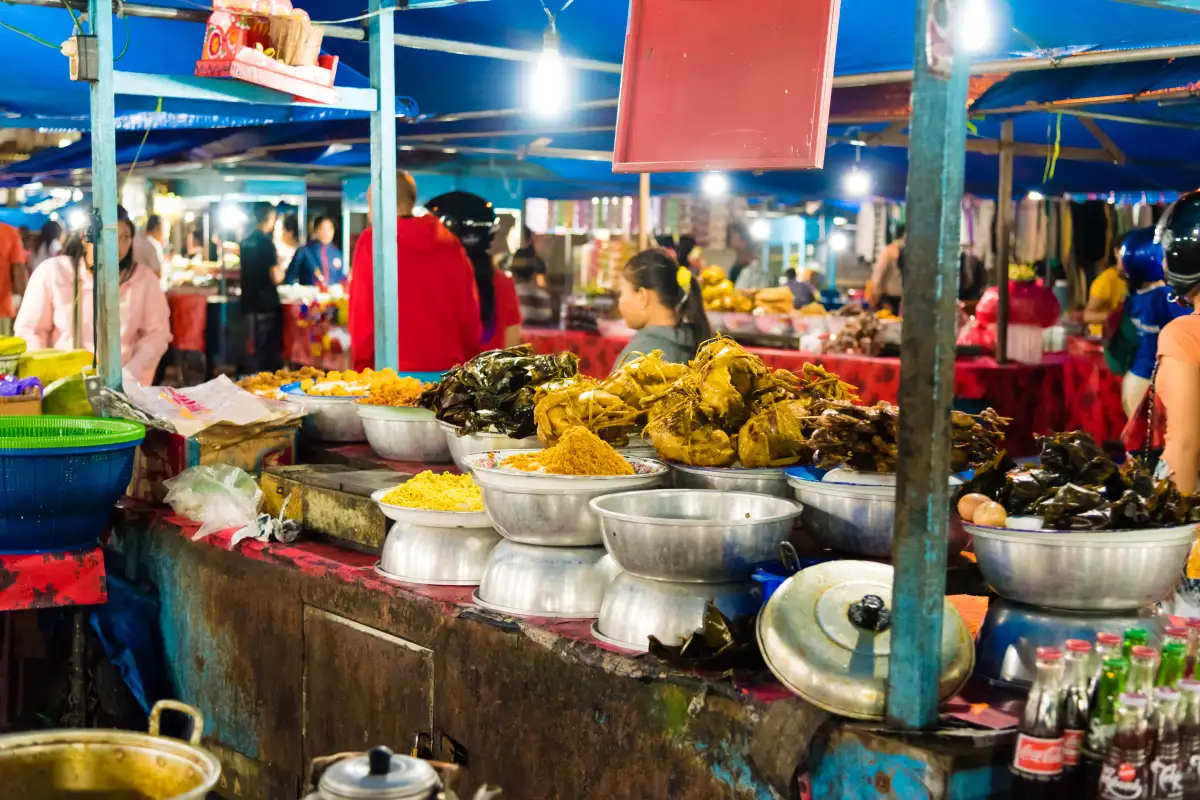
Heritage travel does not always happen inside museums or historic buildings. Traditional markets provide another way to understand how a city functions today. Pasar Anyar, one of Singaraja’s main traditional markets, offers everyday goods including fresh produce and household necessities.
A market visit can reveal a different side of Singaraja than a heritage walk. Instead of looking only at historic buildings, visitors can observe how people shop, trade, work, and interact in contemporary North Bali. Student groups can also use markets as a starting point for discussions about local economies, food systems, livelihoods, and the relationship between traditional commerce and modern retail.
Read also: Bali Local Foods
Learn From Singaraja’s Cultural Institutions
Singaraja is also home to institutions that preserve North Bali’s intellectual and cultural heritage. One important example is Gedong Kirtya, a cultural institution and repository for Balinese lontar manuscripts. Its collection covers subjects including religion, law, traditional knowledge, medicine, history, and classical literature.
This makes Gedong Kirtya particularly relevant to anyone interested in how knowledge is preserved and transmitted across generations. Rather than viewing a manuscript collection simply as something to look at, visitors can consider what written traditions reveal about Balinese knowledge systems and how cultural institutions help preserve them today.
Current information from the Buleleng Regency cultural office lists Gedong Kirtya’s opening hours as Monday to Thursday from 8:00 a.m. to 4:00 p.m. and Friday from 8:00 a.m. to 1 p.m. Opening schedules can change, so visitors should confirm before planning a visit.
Singaraja and North Bali’s Cultural Diversity
Singaraja’s history cannot be separated from the different communities that have lived and traded in the region. The development of the Buleleng port brought together local Balinese communities with migrant groups, including Bugis and Chinese communities. Historical trading activity contributed to the growth of commercial areas and increased interaction between different cultural groups.
This history provides a useful reminder that North Bali culture is not a single, fixed identity. It has developed through interactions between communities, religions, trade networks, migration, political changes, and local traditions. Visitors can explore this diversity by paying attention to the neighborhoods, religious spaces, food, architecture, and businesses that make up the city today.
Things to Do in Singaraja Beyond Sightseeing
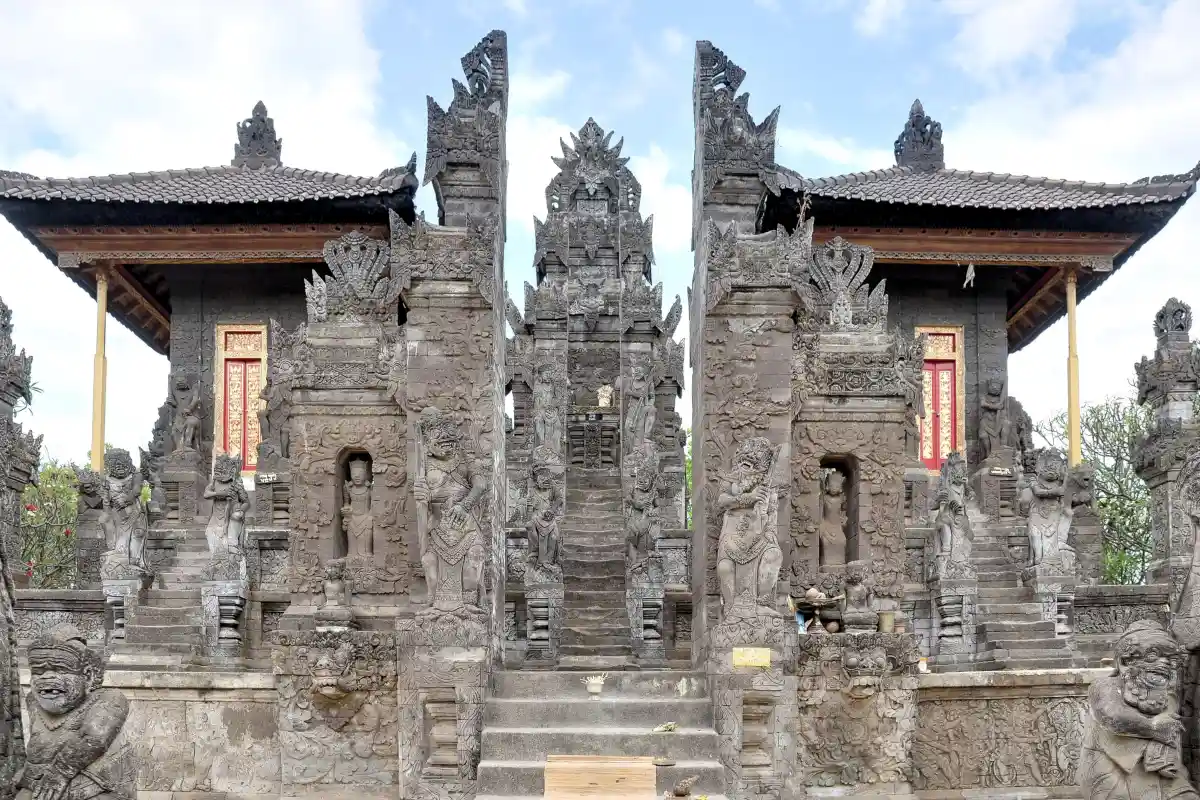
A Singaraja travel guide does not have to be a checklist of attractions. The city is best experienced by taking some time to explore its history, observe everyday life, and understand how different parts of Singaraja connect.
Here are a few ways to experience the city beyond simply visiting its most popular sights:
- Walk through central Singaraja to see historic buildings and architecture that reflect the city’s changing past.
- Visit the former Buleleng Port area and learn how maritime trade helped shape Singaraja’s economy and communities.
- Explore Pasar Anyar to experience everyday local commerce and see how the market fits into daily life in the city.
- Visit Gedong Kirtya to learn about Balinese written heritage and the preservation of lontar manuscripts.
- Spend time at Taman Kota Singaraja, a public space where local residents gather, relax, and spend time with their communities.
- Try local food and choose independently owned restaurants, cafés, and small businesses where possible.
- Explore with a local guide who can provide context about Singaraja’s history, culture, and communities that may not be obvious during a self-guided visit.
- Explore nearby coastal and highland communities to see how Singaraja connects with the wider Buleleng landscape.
You do not need to fit everything into one day. Leaving time to walk, observe, talk to people, and explore at a slower pace can reveal how Singaraja’s history, culture, communities, and local economy continue to shape the city.
Connect Singaraja With the Wider Buleleng Landscape
Singaraja is also a useful starting point for exploring Buleleng Bali beyond the city. The northern region stretches from the coast toward agricultural areas, villages, forests, waterfalls, and mountain landscapes. This creates an opportunity to understand the relationship between urban centers and the communities and environments around them.
A trip that combines Singaraja with nearby coastal or highland areas can reveal how different livelihoods depend on different parts of the landscape. Fishing, agriculture, tourism, trade, hospitality, and small businesses all contribute to the regional economy. This wider perspective is especially useful when thinking about responsible travel in North Bali. Tourism does not happen in isolation. It affects communities, environments, infrastructure, and local economies.
Read also: Bali Animal Conservation
How to Travel Responsibly in Singaraja
Responsible travel in Singaraja starts with treating the city as a living community rather than a collection of photo opportunities. Small choices can make a visit more respectful while also helping travelers better understand North Bali.
Support Local Businesses
Choose locally owned restaurants, shops, guides, accommodation, and transportation services when possible. Spending locally can help distribute tourism benefits beyond larger tourism businesses.
Learn From Local Guides
A local guide can add historical and cultural context that is difficult to understand from a quick visit. Ask questions about the places you see and listen to local perspectives.
Respect Sacred and Cultural Spaces
Singaraja and the surrounding Buleleng region include temples and other culturally significant spaces. Dress appropriately, follow local rules, and ask before photographing people, ceremonies, or religious activities.
Photograph With Consideration
Historic buildings and markets may look interesting through a camera, but remember that many are also part of people’s everyday lives. Ask permission when photographing individuals, particularly when taking close up portraits.
Be Mindful at Markets
Markets are working spaces, not just tourist attractions. Avoid blocking stalls or walkways while taking photos, ask before photographing vendors, and be considerate of people who are there to shop or work.
Respect Heritage Buildings
Historic buildings are part of Singaraja’s cultural heritage, but they may also have practical uses or be located in active neighborhoods. Avoid entering restricted areas, touching architectural features unnecessarily, or treating heritage sites purely as photo backdrops.
Reduce Waste
Carry a reusable water bottle, avoid unnecessary single-use plastics, and dispose of rubbish properly. Keeping public spaces, markets, and heritage areas clean is a simple way to reduce the impact of tourism.
Dress Appropriately
Choose respectful clothing when visiting temples, traditional communities, or other cultural spaces. When in doubt, follow local guidance rather than assuming that the same expectations apply everywhere.
Ask Before Photographing Ceremonies
Religious ceremonies and community events are meaningful parts of local life. Ask permission before taking photographs, keep an appropriate distance, and avoid interrupting people who are participating in the ceremony.
Choose Experiences That Encourage Learning
Look for experiences that allow you to learn about Singaraja’s history, local economy, culture, and communities rather than simply collecting photographs. A conversation with a local guide, a visit to a traditional market, or time spent understanding the city’s heritage can make a visit more meaningful.
Read also: Regenerative Tourism in Bali
Singaraja as an Experiential Learning Destination
Singaraja Bali offers a valuable setting for experiential learning because students can explore history, culture, and regional development through places that are still part of everyday life.
A heritage walk can help students examine colonial architecture and how the city has changed over time. Visiting the former Buleleng Port can open discussions about maritime trade, migration, and the role of Singaraja in the wider Indonesian archipelago. A visit to a traditional market can provide a closer look at local livelihoods, food systems, and contemporary commerce, while Gedong Kirtya can introduce students to the preservation and transmission of Balinese knowledge through lontar manuscripts.
Singaraja also provides an opportunity to look at how different parts of Bali have developed through tourism and economic change. Students can explore questions such as:
- History: How have royal, colonial, and post-independence periods shaped Singaraja?
- Urban development: What happens to a city when its political or economic importance changes?
- Trade and migration: How did the port contribute to the movement of people, goods, and ideas?
- Cultural heritage: What should be preserved, and how can heritage remain relevant to local communities?
- Regional development: How does Singaraja connect with coastal, agricultural, and highland communities across Buleleng?
- Tourism: How does the experience of visiting northern Bali differ from the tourism economies of southern Bali?
These questions encourage students to observe what they see, connect it to broader social and economic themes, and reflect on how cities change over time. In this way, Singaraja travel can become a hands on learning experience rather than simply a sightseeing activity.
Read also: Experiential Education in Bali
Experience Singaraja With More Curiosity
Singaraja Bali travel offers a different perspective on the island because its appeal is not limited to a collection of tourist attractions. Its history can be found in old buildings, port infrastructure, markets, cultural institutions, public spaces, and the communities that continue to shape the city.
For travelers, Singaraja offers the chance to experience North Bali at a slower and more thoughtful pace. For students and educators, it can also serve as a real world setting for exploring history, culture, urban change, and regional development. Through Bali Institute’s programs, participants can engage with places like Singaraja through field-based learning that encourages observation, respectful interaction, and a deeper understanding of how the past continues to influence communities in the present.