When people think of Bali, images of paradise come to mind: lush rice terraces, beautiful beaches, and diverse culture. But beyond the traditional postcards, Bali is also home to another awe-inspiring natural phenomenon—volcanoes. Bali’s geological landscape is as dramatic as its cultural tapestry, boasting a number of stunning volcanic mountains that shape both the environment and local life.
Why There’s So Many Volcanoes in Bali?

Indonesia, including Bali, sits on the Pacific Ring of Fire, an area with high volcanic and seismic activity due to the movement and collision of tectonic plates. Bali boasts several volcanoes due to this tectonic activity, presenting both a risk and a source of wonder.
Can You Visit Bali’s Volcanoes?
The short answer is yes, and many do! Bali’s volcanoes are popular with adventurers and nature lovers, offering incredible hiking opportunities and stunning views from their summits. However, it’s crucial to approach these natural wonders with both excitement and caution, due to their unpredictable nature. Before visiting, check for any travel advisories or volcanic activity updates to ensure your safety.
6 Bali Volcanoes & Mountains You Can Visit
1. Mount Agung

- Location: Eastern Bali, in the Karangasem Regency.
- Elevation: Approximately 3,031 meters (9,944 feet).
- Status: Active. Its last major eruption was in 2019, with the potential for future activity.
Mount Agung is revered in Balinese culture as the “mother mountain” and is considered the abode of the gods. Balinese Hindus often view it as a mystical axis of the universe. Climbing Agung is not just a physical journey, but a spiritual one. The trek is challenging and typically begins before dawn to catch the sunrise. As you ascend, you’ll pass through different ecosystems, from dense rainforest to barren volcanic rock. Reaching the summit, especially on a clear day, offers panoramic views of the entire island and even the neighboring Lombok Island.
2. Mount Batur

- Location: North East of Bali, in the Kintamani District.
- Elevation: Around 1,717 meters (5,633 feet).
- Status: Active. Despite its frequent eruptions, it remains a popular trekking spot.
Mount Batur is famed for its fantastic sunrise trek. It’s a relatively easier climb compared to Agung, making it accessible to a wider range of hikers. Tours often begin with a pre-dawn pickup, ensuring you reach the summit by sunrise. As the day breaks, the view over the caldera and Lake Batur is nothing short of magical, often shrouded in mist. The fertile surrounding area supports local agriculture, and visitors often conclude their trek with a soak in nearby hot springs.
Read more : One of The Best Adventure Activities in Bali: Hiking Mount Batur
3. Mount Batukaru
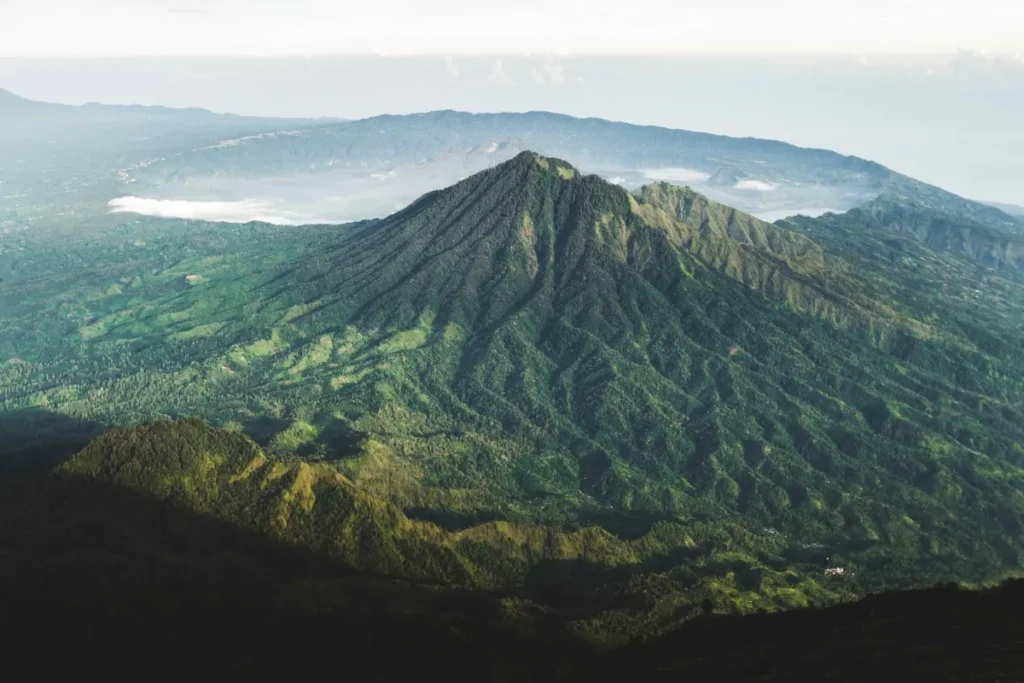
- Location: Tabanan Regency, Central Bali.
- Elevation: Approximately 2,276 meters (7,467 feet).
- Status: Dormant. It’s lush and less traversed than other peaks.
Mount Batukaru offers a more serene trekking experience through quiet paths enveloped in lush jungle. It’s Bali’s second highest mountain, but less frequented by tourists, allowing for a more personal communion with nature. The hike is often coupled with a visit to Pura Luhur Batukaru, a significant Hindu temple located on its slopes. The mountain is a hotspot for flora and fauna, providing a haven for birdwatchers and nature lovers.
4. Mount Abang
- Location: Near Mount Batur, in the Bangli Regency.
- Elevation: About 2,152 meters (7,060 feet).
- Status: Dormant. It sits on the rim of the Batur caldera.
Mount Abang’s trails are less crowded, offering a peaceful hiking experience. As part of the Batur caldera, it presents unique geological formations and a chance to see the region’s diverse ecosystems up close. The descent into the lush forests and the views of Lake Batur and Mount Batur offer a picturesque backdrop to your trek. It’s perfect for those seeking a spiritual escape or meditation spot in nature.
5. Mount Catur (Bratan)
- Location: Near Bedugul, in the Baturiti.
- Elevation: Approximately 2,096 meters (6,877 feet).
- Status: Dormant.
The trek to Mount Catur (also known as Mount Bratan) is both serene and visually striking. The cool, misty air adds a mystical quality to the experience, particularly as you approach the summit. The mountain overlooks Lake Bratan and the famous Ulun Danu Bratan Temple, providing a picture-perfect vantage point. It’s a moderate climb and a favorite for those interested in combining hiking with cultural exploration.
6. Mount Patas
- Location: Northwest Bali near Pemuteran.
- Elevation: Roughly 1,414 meters (4,638 feet).
- Status: Dormant.
Mount Patas offers a more secluded hiking opportunity. The trails take you through dense forests and up to viewpoints that offer sweeping vistas of the north coast of Bali. The summit provides views of the West Bali National Park and the sea. It’s a hidden gem for those looking to escape the more tourist-heavy areas of Bali and enjoy a quiet day immersed in nature’s wonders.
Read also : 8 Ultimate Bali Activities for Young Adult: Adventure, Nature & Cultural Learning
Bali Volcano Mountain Recommendations & Tips
Those drawn to volcanoes should approach with care, respect the natural environment, and heed local advice and scientific updates. It is advised to have guided hikes and have safety measures in place to ensure a secure and informative journey.
In conclusion, the volcanoes of Bali are magnificent reminders of the Earth’s dynamic forces. They represent both beauty and danger, tranquility and excitement. Visiting them offers not only the thrill of the hike but also a chance to connect with Bali’s spiritual heart and soul. If done thoughtfully, it can be a highlight of an adventure to this tropical paradise.
Experience Bali in a Meaningful Way With Bali Institute Group Tour
For those desiring a deeper connection with Bali’s volcanic wonders while contributing positively to the island, the Bali Institute is your premiere travel partner. Specializing in customized group tours, we curate experiences that emphasize sustainability and meaningful engagement with nature. Our tailor-made itineraries include nature preservation initiatives, eco-conscious activities, and community empowerment projects, allowing visitors to enjoy Bali’s beauty while making a lasting impact.
At Bali Institute, we cater to diverse groups, including student assemblies looking to expand their learning beyond the classroom with enriching summer programs, and adult groups seeking unique insights into Bali’s lesser-known treasures. Whether it’s a Corporate Social Responsibility (CSR) outing designed to align with ESG values or an educational exploration, our experiences ensure every moment spent in Bali contributes to both personal growth and the well-being of our world. Join us for an adventure that harmonizes recreation with responsibility, and witness Bali through a lens of sustainability and discovery.