Understanding a Balinese Wedding Beyond the Ceremony
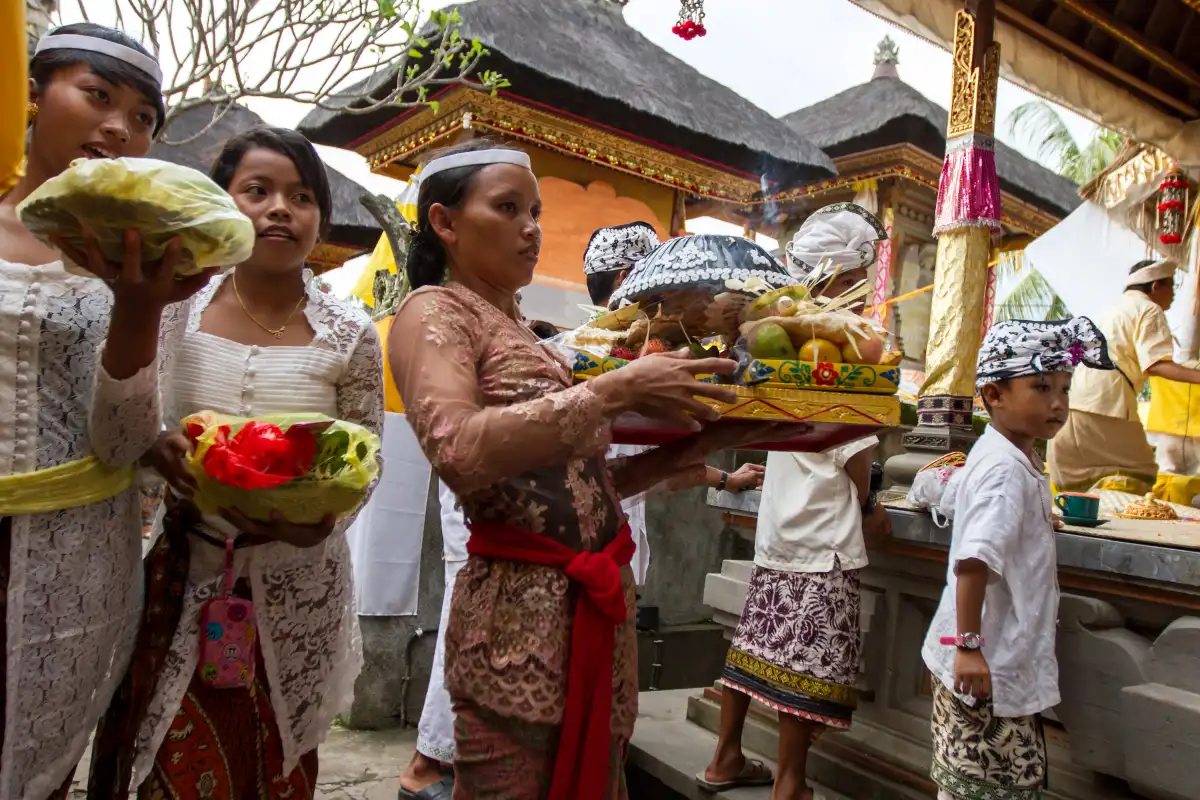
A Balinese wedding is much more than a celebration between two people. It is a religious ceremony, a family milestone, and an important part of community life. Rooted in Balinese Hinduism, every stage of the wedding carries meaning, reflecting values of harmony, responsibility, and respect for ancestors.
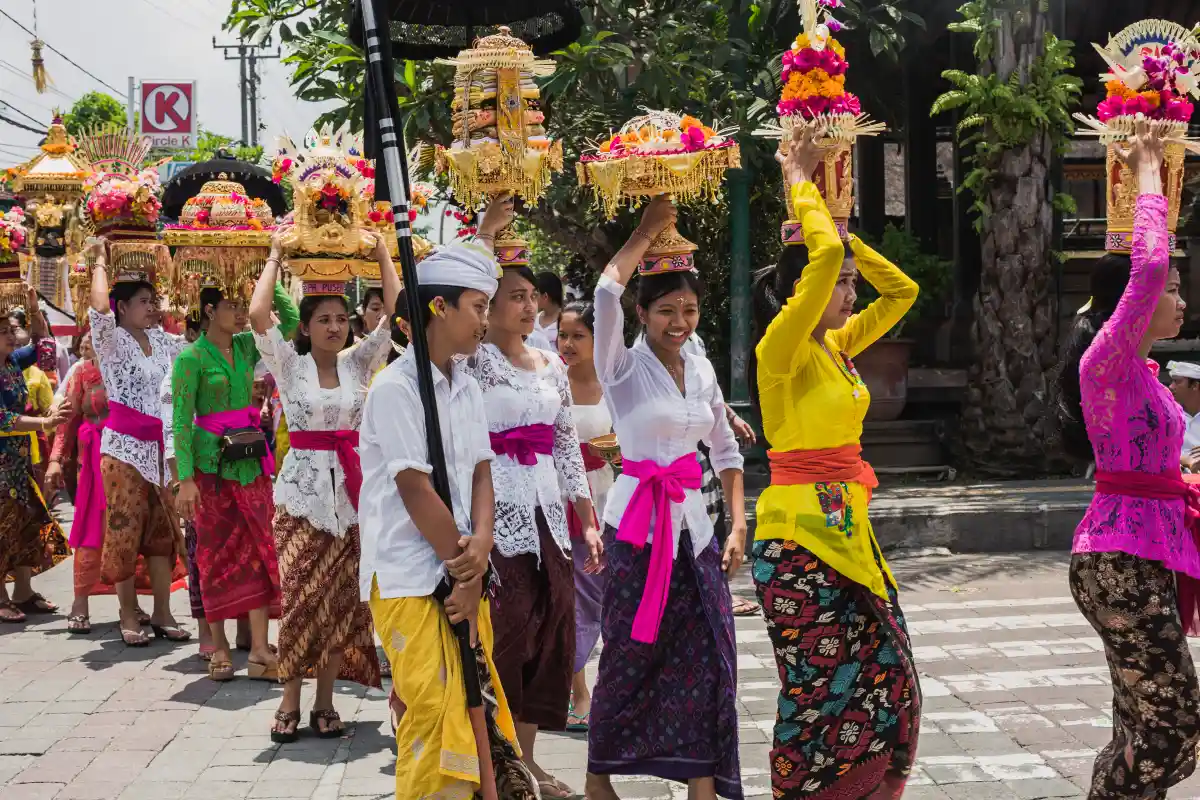
For many visitors, Balinese weddings are known for their colourful attire, traditional music, and beautifully decorated temples. While these elements are certainly part of the celebration, they represent something much deeper. Every ritual, offering, and prayer serves a purpose, connecting the couple not only to one another but also to their families, their community, and their spiritual beliefs.
Understanding these traditions offers valuable insight into Balinese culture and the customs that continue to shape everyday life across the island.
Marriage in Balinese Society
Marriage marks the beginning of a new chapter for the couple, but it also strengthens the relationship between two extended families. In Balinese society, weddings are considered an important transition that carries both religious and social responsibilities.
Following marriage, the couple becomes part of a wider community network that extends beyond their household. Family members often work together to prepare ceremonies, create offerings, and host celebrations, reflecting the strong spirit of gotong royong, or mutual cooperation, that remains central to village life.
These traditions continue to play an important role in preserving the customs, values, and shared responsibilities that connect Balinese people across generations.
Read also Get to Know Balinese People & Traditions, Language, Culture and Origins
The Meaning Behind Balinese Wedding Rituals
A traditional Balinese wedding is made up of a series of ceremonies that prepare the couple spiritually, strengthen the relationship between two families, and mark their new responsibilities within the community. While the sequence and customs may differ between villages and family traditions, each ritual reflects the values of Balinese Hinduism and the importance of harmony in married life.
Before the Wedding
In some Balinese communities, the wedding journey begins with preparations such as Ngekeb, a ceremony in which the bride prepares physically and spiritually before marriage. Depending on local traditions, families may also perform rituals that formally introduce the groom to the bride’s family and symbolize the union of two households.
Mekala-kala: A Ceremony of Purification
One of the most important rituals is Mekala-kala, also known in some communities as Mebyakala. This purification ceremony is performed before the marriage is formally blessed.
Through prayers, offerings, and symbolic acts, the bride and groom are cleansed of negative influences as they prepare for a new stage of life. In Balinese Hinduism, purification is believed to create balance and harmony, allowing the couple to begin their marriage with a clear mind and sincere intentions.
Natab: Receiving Blessings
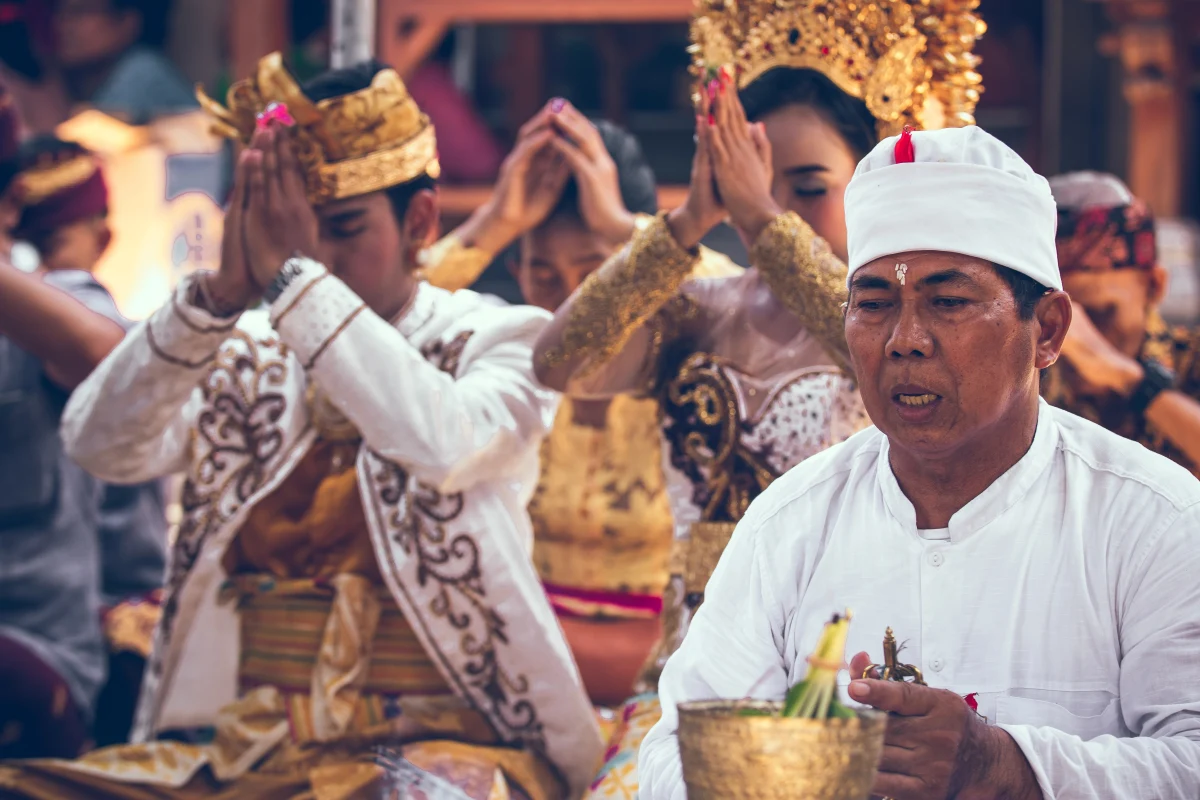
Following the purification ritual, the Natab ceremony marks the religious blessing of the marriage. Led by a Hindu priest, the ceremony includes prayers and offerings asking for health, harmony, prosperity, and guidance for the couple’s future together.
Parents and elders also play an important role, offering their blessings and symbolizing the passing of family values from one generation to the next. This reflects the belief that marriage is not only a personal commitment but also a continuation of family traditions and responsibilities.
After Wedding: Becoming Part of the Community
After the wedding, some families observe additional traditions such as Mejauman, when the newly married couple visits the bride’s family to strengthen the relationship between both households. While practices vary across Bali, these ceremonies reinforce the idea that marriage connects not only two individuals but also two extended families.
The couple also becomes more deeply involved in the life of their Banjar, the traditional village community. Participating in ceremonies, supporting neighbours, and contributing to community activities are considered an important part of married life and reflect the strong spirit of mutual cooperation that continues to shape Balinese society today.
Read also: What Is a Balinese Banjar? The Community System Behind Daily Life in Bali
More Than Two Families
A Balinese wedding does not only unite two individuals and two families. It also creates a lasting connection between their families and their local community.
Most Balinese families belong to a Banjar, the traditional neighbourhood organisation that plays an important role in daily life. The Banjar supports religious ceremonies, community projects, festivals, and social activities throughout the year.
Following marriage, couples are expected to participate in these shared responsibilities alongside other members of the community. Contributing time, helping organise ceremonies, and supporting neighbours are all considered important parts of village life.
This strong sense of collective responsibility continues to shape Bali’s social structure today, helping preserve traditions through active community participation rather than individual effort alone.
Respecting Sacred Wedding Traditions
As Bali has become a popular destination for weddings and cultural tourism, some traditional ceremonies have been adapted into performances designed primarily for entertainment or photography. While these experiences may appear authentic, they often simplify or remove the religious meaning that gives the rituals their significance.
For visitors and couples planning ceremonies in Bali, respecting these boundaries is important. Sacred rituals should never be recreated purely as decorative performances or social media content without understanding their cultural context.
Choosing to learn about the traditions, seeking guidance from local cultural experts, and respecting ceremonies as acts of worship helps preserve the integrity of Balinese culture while supporting the communities that continue to practise it.
Planning a More Sustainable Bali Wedding
Many couples today are looking for ways to celebrate their wedding while reducing environmental impact and supporting local communities. Bali offers many opportunities to combine meaningful celebrations with more responsible choices.
Some simple ways to plan a more sustainable wedding include:
- Choose locally owned boutique hotels or venues that work closely with surrounding communities.
- Reduce single-use plastics by using reusable or biodegradable alternatives.
- Source flowers and decorations from local growers and artisans.
- Work with caterers who prioritise local ingredients.
- Arrange for excess food to be donated through food rescue organisations where possible.
These decisions not only reduce waste but also help ensure that wedding celebrations contribute positively to Bali’s economy and environment.
Experiencing Balinese Culture with Respect
Balinese weddings offer a unique window into the island’s religious beliefs, community values, and cultural traditions. Looking beyond the ceremony itself reveals the importance of family, shared responsibility, and the spiritual practices that continue to shape everyday life in Bali.
For those interested in learning more about these traditions, Bali Institute develops custom experiential learning programs that connect participants with local communities, cultural practitioners, and heritage experiences across the island. Through Teen Exploration, University Experience, Adult Learning Journeys, and Customized CSR Group Programs, participants have the opportunity to explore Balinese culture in thoughtful and respectful ways while gaining a deeper understanding of the traditions that continue to define the island today.