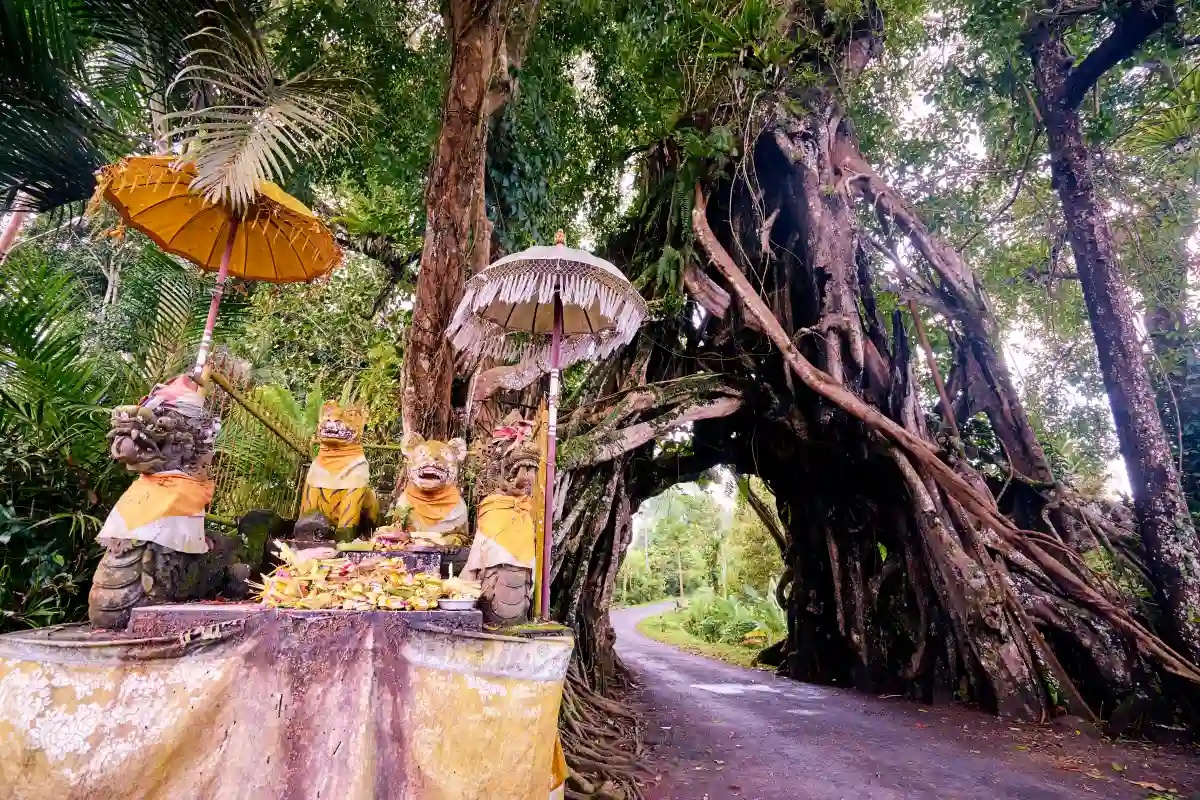
Stepping into Bali often means encountering a culture alive with vibrant celebrations. While the solemn observance of Nyepi marks the traditional new year on the Saka calendar, the island truly erupts in widespread festivity during Galungan and Kuningan. These deeply spiritual festivals, celebrating the triumph of dharma, bring communities together in colorful ceremonies and shared joy, representing a significant festive “New Year” period for Balinese Hindus.
The History of Galungan and Kuningan

The origins of Galungan trace back centuries, rooted deeply in Balinese mythology and Hindu beliefs. According to Balinese legend, the festival commemorates the battle of Indra, the Hindu god of rain and storms, against the demon king Mayadenawa. It is believed that Indra’s victory over Mayadenawa symbolizes the triumph of virtue over vice, paving the way for peace and prosperity on the island. Kuningan, celebrated ten days after Galungan, marks the end of this victorious period and signifies a time of introspection with thanks given to deities for their blessings and protection.
The Cultural Significance

Galungan, symbolizing the triumph of dharma (good) over adharma (evil), is one of Bali’s most crucial celebrations. It marks the time when ancestral spirits return to Earth to be honored by their descendants through various rituals and offerings. It’s a deep expression of gratitude and respect for their ancestors, emphasizing the connection between the living and the spiritual realm.
Kuningan follows ten days after Galungan, effectively concluding the festivities. This day signifies the return of the ancestors’ spirits to their heavenly abode, and the Balinese people ensure proper send-offs with prayers and offerings. It’s a period of introspection, reminding participants of their spiritual duties and the cyclical nature of life.
Determining the Dates of Galungan & Kuningan

The Balinese Pawukon calendar, a unique 210-day system, dictates the timing of Galungan and Kuningan. This ancient lunar calendar’s cycles ensure that the festivals recur twice annually but vary in date each year. Understanding these cycles is integral to Balinese culture, connecting the community’s activities and spiritual practices to their environment and history.
4 Unique Traditions and Practices During Galungan & Kuningan
1. Penjor
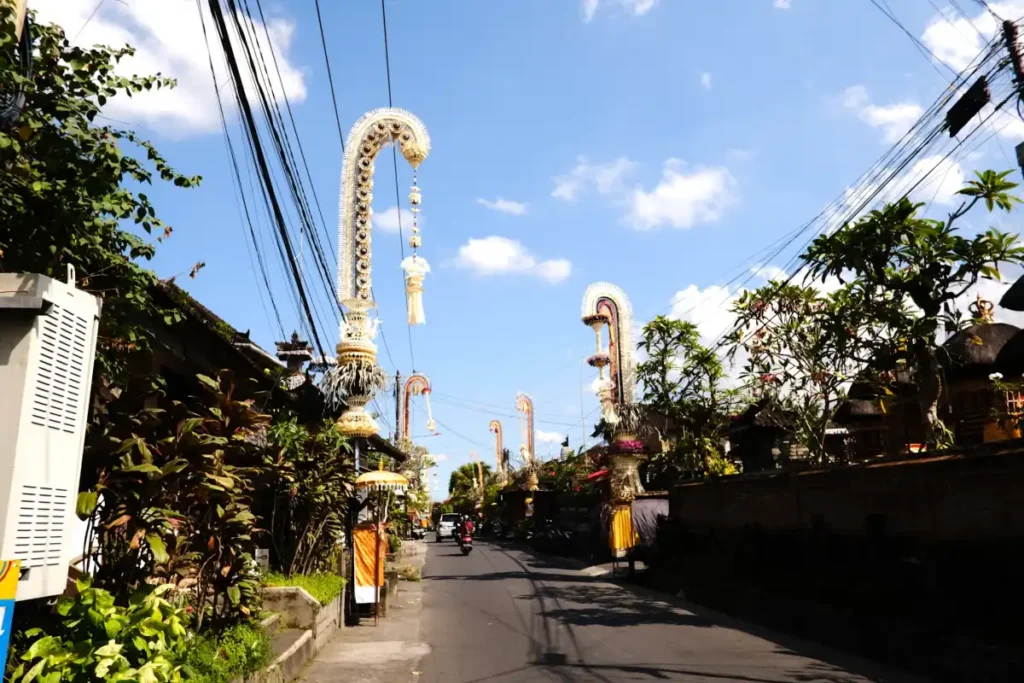
One cannot discuss Galungan without mentioning the vibrant penjors that adorn the roads. These are tall, elegantly arched bamboo poles decorated with young coconut leaves, rice, and flowers, creating an awe-inspiring sight. Each family crafts and erects a penjor in front of their homes, symbolizing prosperity and the essence of nature’s bounty.
2. Rituals and Offerings
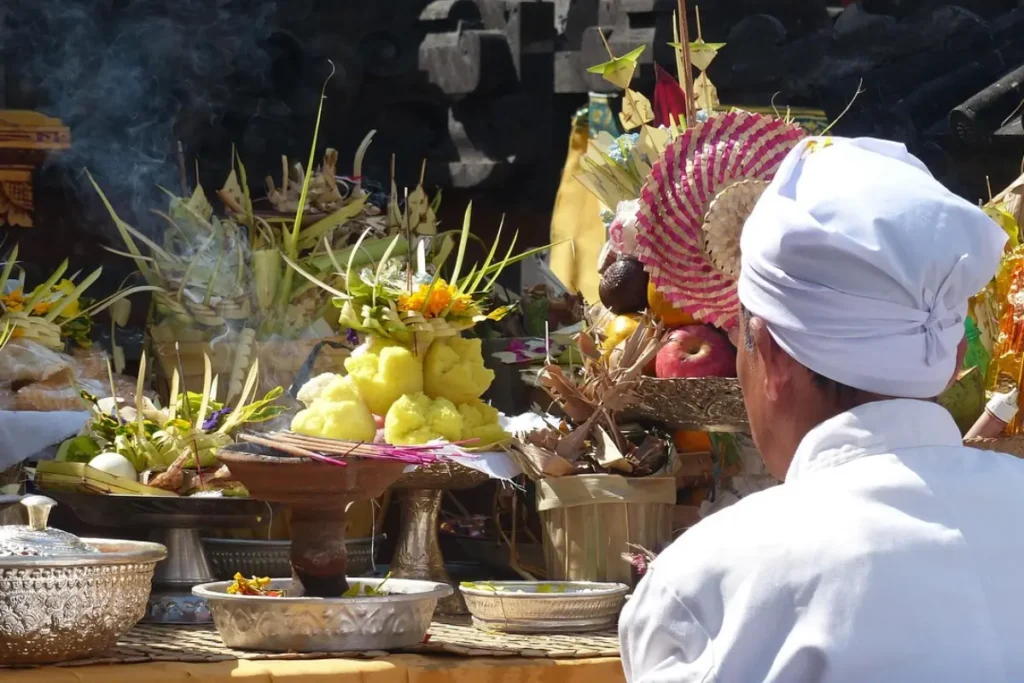
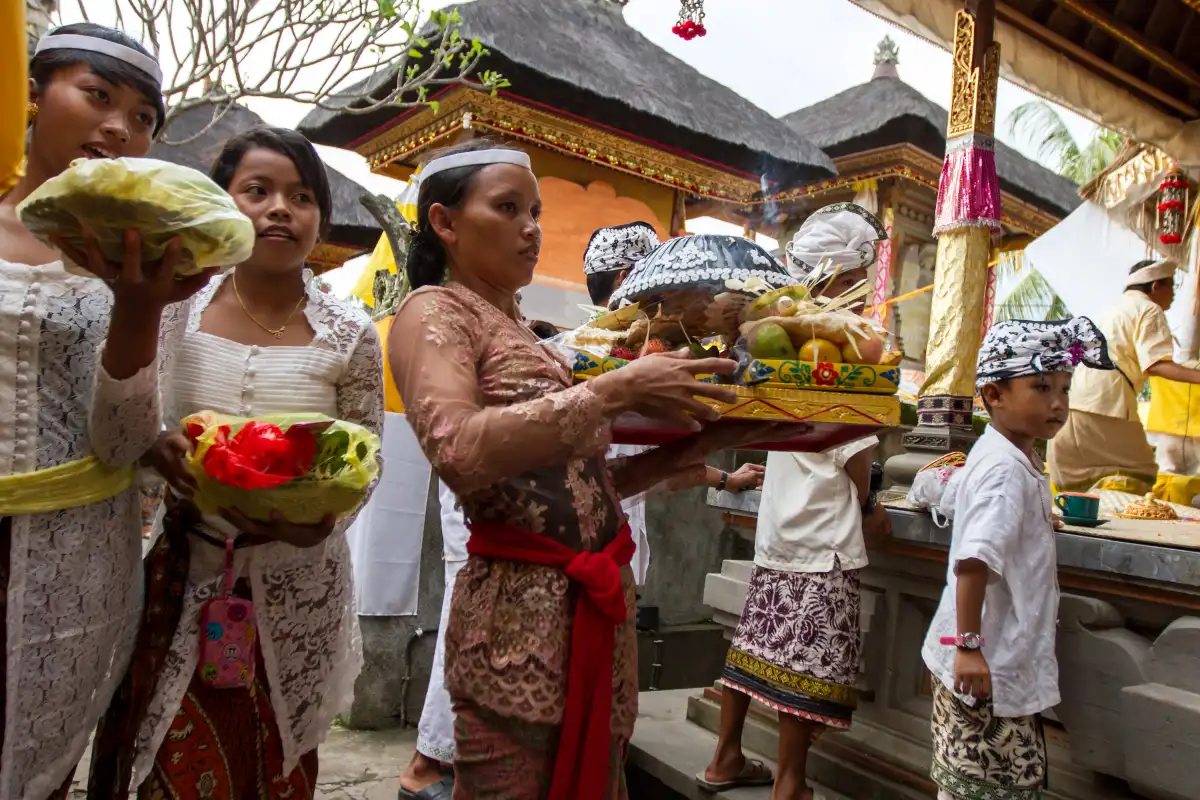
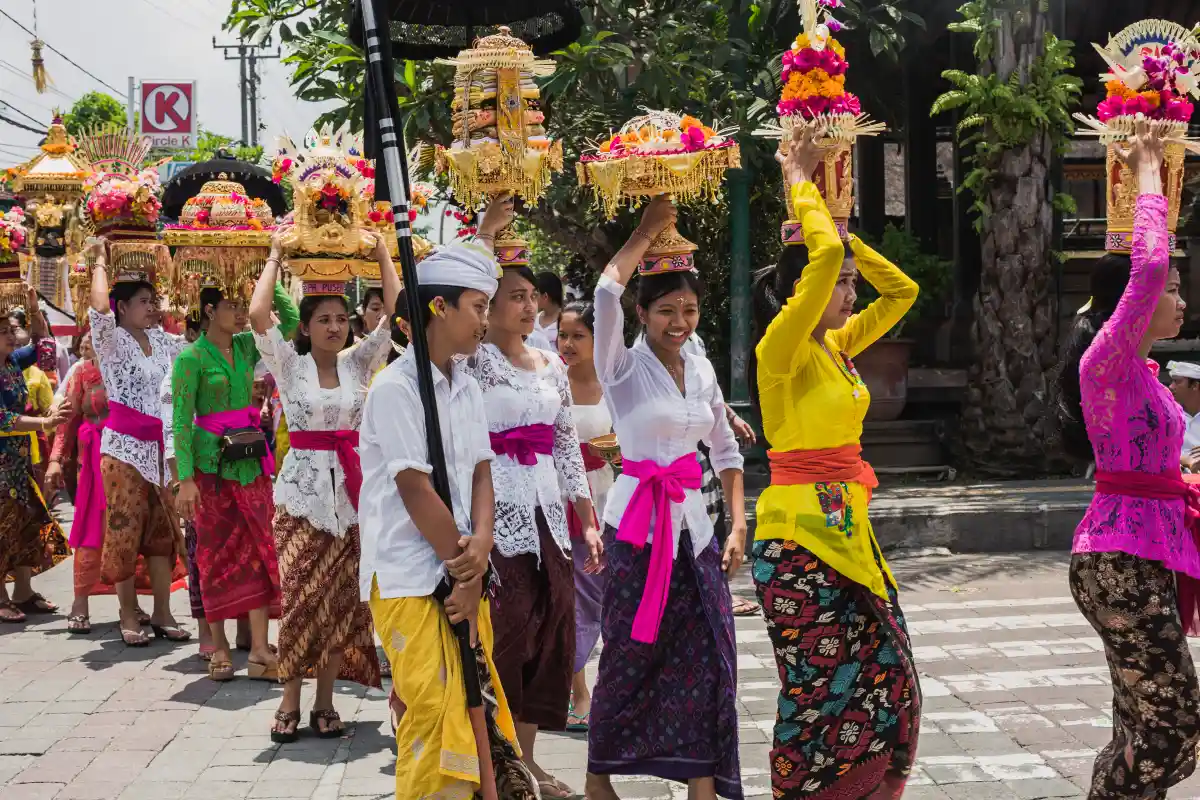
Temples brim with activity, welcoming families who come to pray and present offerings clad in traditional Balinese attire. The air resonates with the sound of gamelan music, complementing the visual symphony of colors. This gathering is a testament to their collective faith and devotion, binding generations together in shared spirituality.
3. Culinary Delights
Traditional dishes like “lawar” and “babi guling” are essential to the festivities, shared among family and friends as a token of hospitality and community bonding. For those experiencing these celebrations, the flavors of these dishes carry the island’s cultural richness.
Read more : On the Menu in Bali: Favourite 8 Local Foods and Cuisine
4. Kuningan Celebrations
During Kuningan, although the penjors are still present, the emphasis shifts slightly towards reflection and family. Offerings are made with yellow rice, a staple symbolizing the auspicious nature of this time. The solemnity of Kuningan complements the celebratory mood of Galungan, creating a balanced narrative of joy and reverence.
Is Bali Closed on Galungan and Kuningan Day?
If you’re planning to be in Bali during Galungan and Kuningan, you might wonder about closures. Unlike the complete island-wide pause for Nyepi, Bali remains open during these festivals, though many local shops and businesses will close or have reduced hours as families gather for ceremonies. However, tourist amenities like hotels, most restaurants, and key tour operators typically continue to operate to ensure visitors can still enjoy their stay.
Visiting at this time offers a truly unique window into the heart of Balinese culture. While some local services may be limited, you’ll witness the island adorned with ‘penjor’ bamboo poles and experience the palpable spiritual energy. This is a chance to respectfully observe vibrant local traditions and ceremonies, providing a deeper, more authentic understanding of Bali beyond the usual tourist activities. Plan ahead for specific local businesses, but embrace the opportunity to see Bali in its festive spiritual prime.
Read also : All About Nyepi in Bali: The Sacred Day of Silence
Experience Balinese Cultural Festivity Firsthand With Balinese Institute
Imagine exploring Bali’s natural wonders while being immersed in local traditions—a chance to connect with the land and its people on a profound level. If you’re an adventurous spirit eager to explore the genuine heart of Balinese culture, these programs offer a pathway to memorable experiences. From interactive cultural exchanges to activities that take you off the beaten path, the Bali Institute is your partner in unlocking the true essence of Bali in a way that respects and preserves its vibrant heritage.
Bali Institute offers a unique gateway for those yearning to delve deeper, crafting customized group tours that promise both transformative and educational experiences. Whether you’re a university student searching for an enriching summer program or part of a corporate team seeking a memorable CSR retreat, the Bali Institute ensures that your journey will be nothing short of mesmerizing. Their programs intertwine cultural engagement with sustainability, allowing participants to interact with local communities and learn from organizations championing sustainable efforts firsthand.