When we walk through Bali during Galungan, the sight of penjors lining village roads instantly draws us in. Their tall bamboo arcs sway with the wind, offering a gentle reminder that Balinese spirituality is deeply rooted in nature, gratitude, and cosmic balance. In this article, we explore the meaning of penjor in Balinese ritual, its symbolism, and how this iconic cultural element continues to shape daily life, tradition, and identity in Bali.
What Is a Penjor?
A penjor is a tall, curved bamboo pole decorated with young coconut leaves, rice stalks, fruits, and natural offerings. We recognize it as one of Bali’s most sacred ceremonial symbols especially during Galungan, when penjors appear in front of every family compound as a tribute to prosperity, harmony, and divine presence.
Traditionally, we create a penjor as a physical expression of gratitude for life’s blessings. It represents our relationship with nature, the gods, and the cycle of spiritual triumph, especially the victory of Dharma (good) over Adharma (imbalance).
Read also : Discovering Bali’s Culture and Traditions: A Deep Dive with Bali Institute
Historical and Spiritual Meaning in Balinese Hinduism
The philosophical roots of the penjor reach deep into Balinese Hindu cosmology. Historically, the penjor symbolizes:
- Mount Agung, the most sacred axis of the Balinese universe
- Tri Hita Karana, the harmonious relationship between humans, nature, and the divine
- Bhuwana Agung & Bhuwana Alit, the balance between the macrocosm and the microcosm
When we place a penjor outside our family gates, we are not only beautifying the village. We are acknowledging that all fortune, food, health, shelter, and peace comes from the divine.
Symbolism of Each Component
Every part of the penjor carries a specific meaning tied to agriculture, nature, and spiritual life. Together, they represent prosperity and the prayers of the household.

1. Bamboo Pole (Tiing)
The tall, curved pole symbolizes the sacred mountain and the spiritual axis connecting heaven and earth. The arc represents humility and reverence before the divine.
2. Young Coconut Leaves (Janur)
The intricate woven decorations signify purity, renewal, and our intention to maintain harmony.
3. Rice Stalks (Padi)
Rice represents sustenance and abundance, reminding us that prosperity comes from the synergy between humans and nature.
4. Coconuts (Nyuh)
Coconuts symbolize life, purification, and the interconnectedness of all living things.
5. Palawija & Fruits
These signify the blessings of harvest and the cyclical nature of agricultural life.
6. Sanggah or Penjor Shrine
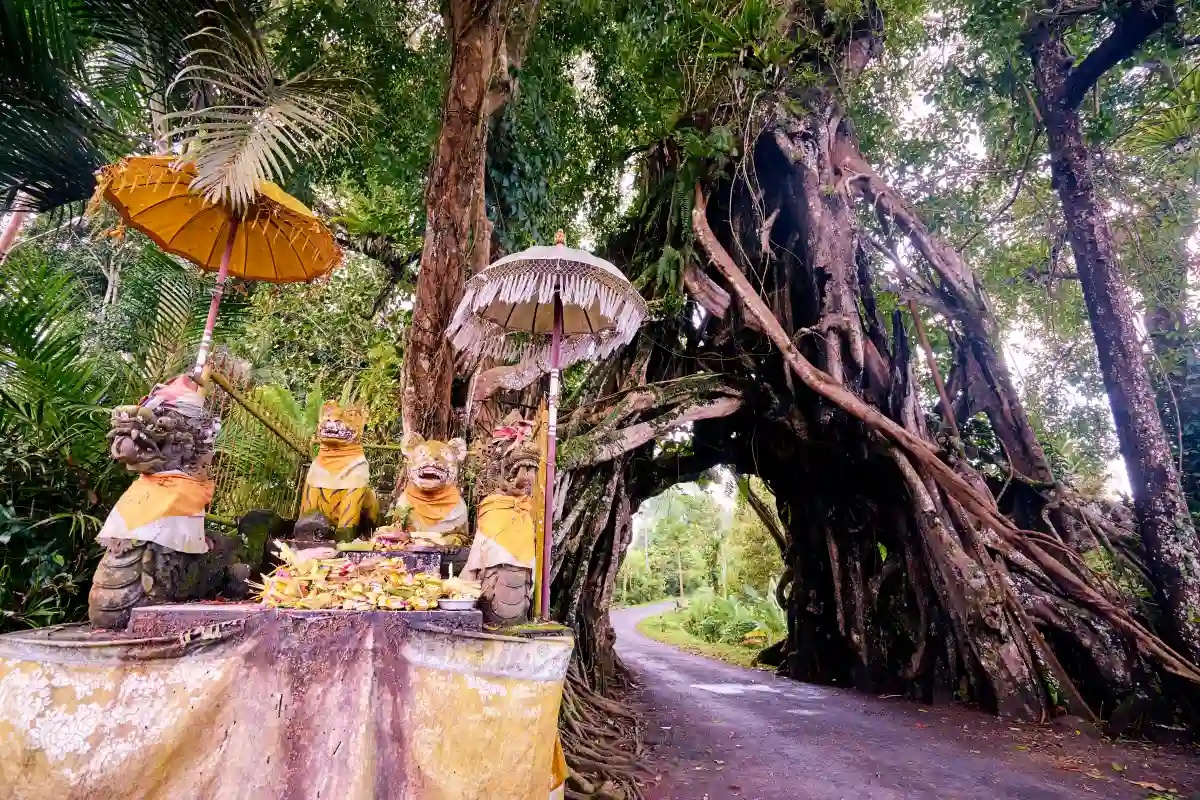
A small altar placed at the base serves as the focal point for offerings, prayers, and gratitude during Galungan and other ceremonies.
When Penjor Is Used
Although most travelers associate the penjor with Galungan, its purpose extends beyond that celebration.
Galungan & Kuningan
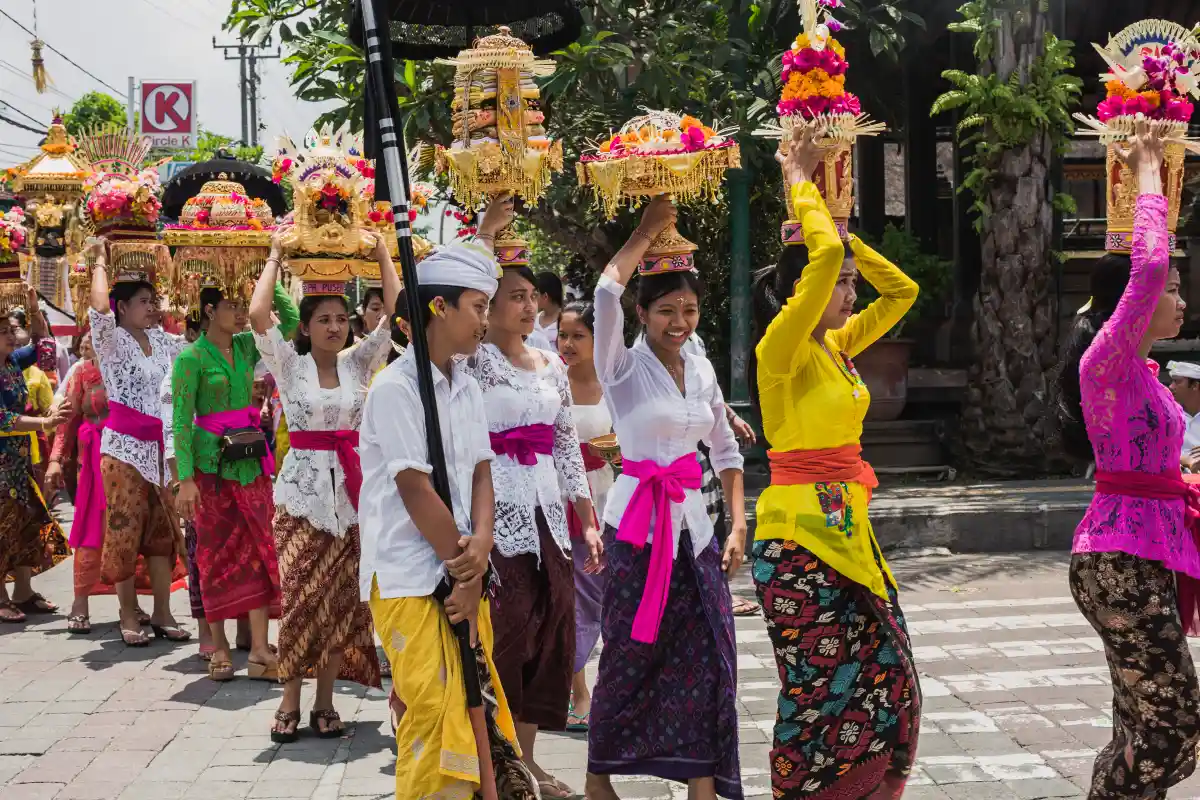
During Galungan, penjors line the streets as symbols of victory of Dharma. During Kuningan, we renew offerings to honor ancestral spirits who briefly return home before ascending again.
Temple Ceremonies (Odalan)
Temples often use penjors to decorate sacred areas, reaffirming the temple’s connection to nature and divine energy.
Community Rituals & Festivals
Some villages place penjors during large communal rites, blessings, and cultural events to signify unity and abundance.
Read also : Bali’s Galungan Festival: The Celebration of Dharma Over Adharma
How Balinese Families Prepare a Penjor
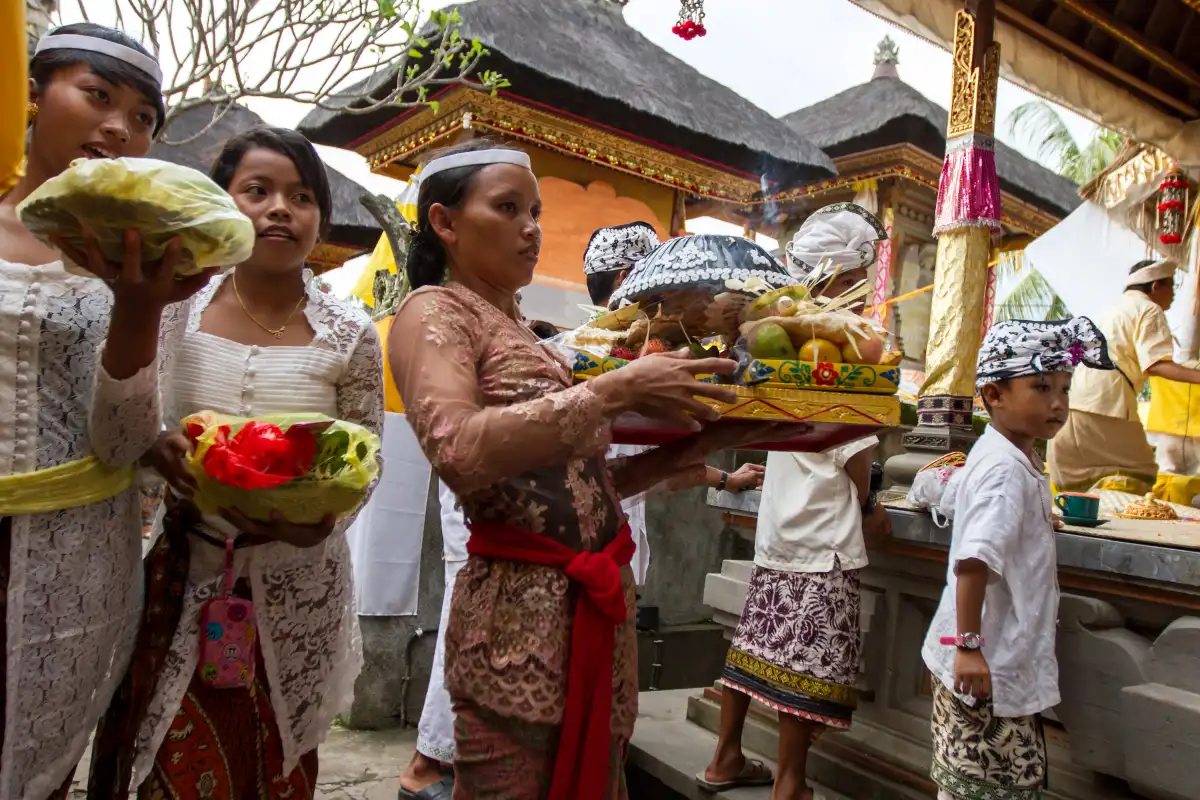
Preparing a penjor is both an artistic and spiritual process. Each family collaborates in cutting bamboo, weaving palm leaves, gathering fruits, rice stalks, and preparing offerings.
The steps usually include:
- Selecting a strong, curved bamboo pole
- Decorating it with janur and woven ornaments
- Adding agricultural symbols like rice, coconuts, or palawija
- Installing the penjor in front of the family compound
- Preparing the shrine and daily offerings
Through this preparation, we strengthen our familial bonds while reaffirming gratitude toward the divine.
Modern Interpretations vs. Traditional Rules
As Bali evolves, penjors have also undergone transformations. Some families now incorporate modern decorative elements, while others remain committed to the traditional format that prioritizes natural materials and spiritual symbolism.
The most important principle remains unchanged: the penjor must express sincerity, gratitude, and respect for Dharma.
Cultural Etiquette for Visitors Photographing Penjor

We welcome visitors who admire our culture, but certain etiquette helps maintain respect:
- Photography is fine—just avoid touching any part of the penjor.
- Keep a respectful distance from the offering shrine.
- Never obstruct a family performing rituals.
- Avoid posing directly beneath the penjor shrine area, as it is sacred.
By honoring these guidelines, visitors help protect the cultural integrity of the ritual.
Connection to Sustainability
Penjors reflect a sustainable philosophy long before sustainability became a global conversation. We use natural materials such as bamboo, janur, fruits, rice stalks, most of which return to the earth without harm. Through the penjor tradition, we preserve ecological values while strengthening our cultural identity.
The meaning of penjor in Balinese ritual extends far beyond decoration. It is a holistic expression of gratitude, harmony, and spiritual identity. For us, the penjor stands as a living bridge between the seen and the unseen, the past and the present, the human and the divine.
Explore Bali’s Cultural Depth with Bali Institute
For groups seeking deeper cultural understanding, Bali Institute designs immersive, sustainability-driven programs that bring Balinese philosophy to life from rituals like the penjor tradition to community-based experiences across the island. Our programs include Teen Exploration for student learning adventures, University Experience for faculty-led cultural immersion and field study, Adult Learning Journey for community group immersive travel, and Customized CSR Group Tours for companies seeking ESG-focused, eco-conscious, and community-supportive activities. Each journey is designed to help groups experience Bali respectfully, meaningfully, and sustainably.