What is Galungan?
In Bali, few celebrations capture the spirit of faith, family, and community quite like Galungan. This sacred festival marks the triumph of Dharma (good) over Adharma (evil), a timeless reminder of balance and righteousness in life. Celebrated every 210 days according to the Balinese Pawukon calendar, Galungan is not merely a day of worship, its a ten-day spiritual journey that culminates in Kuningan, the day when ancestral spirits return to the heavens.
For the Balinese Hindu community, Galungan is a time when the invisible world meets the visible. It’s when ancestors descend to bless their descendants, and families reunite to honor their lineage, their gods, and the balance of the universe.
Rituals and Symbolism
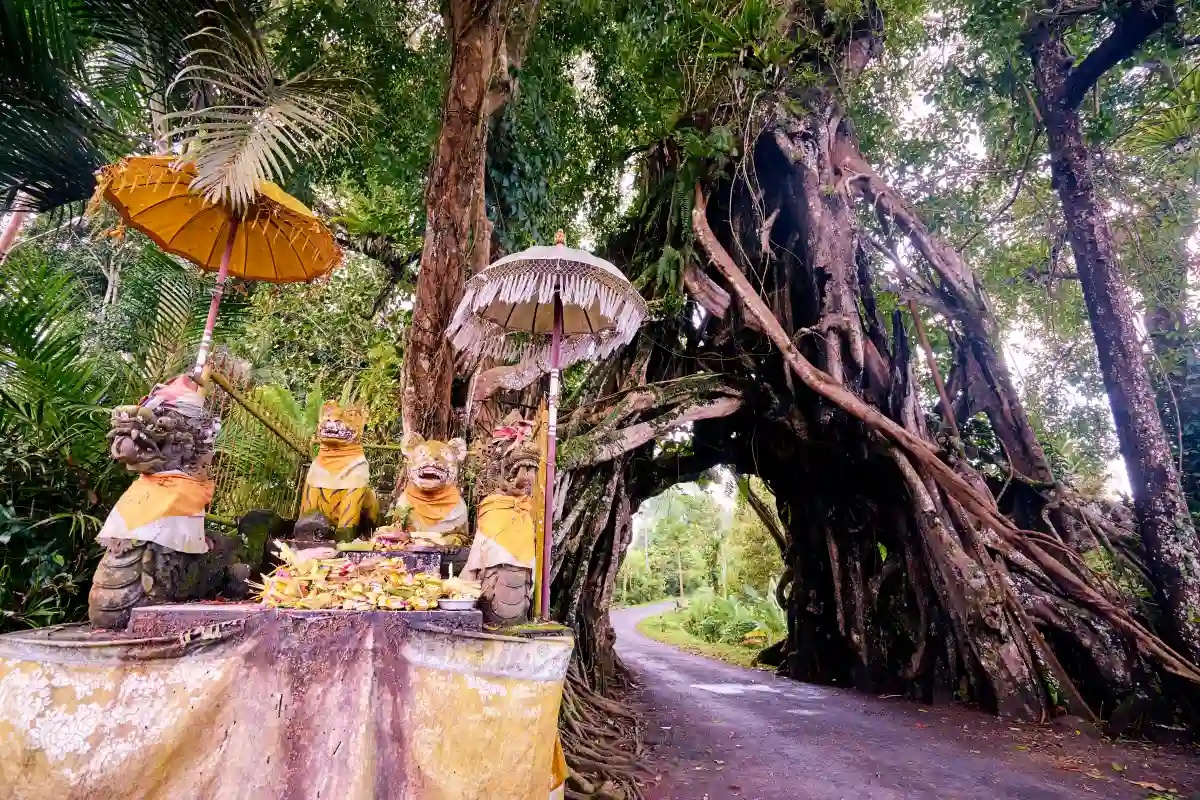
Every element of Galungan carries deep symbolism. The most recognizable is the penjor; tall, curved bamboo poles adorned with coconut leaves, rice, and flowers. These elegant offerings line the streets, turning every village into a vibrant, living artwork. Each penjor represents gratitude for nature’s abundance and a tribute to Mount Agung, the sacred axis of Bali.
On Penampahan Galungan (the day before Galungan), families prepare offerings and often sacrifice pigs or chickens as part of the purification ritual. The main day, Galungan Day, is filled with prayers at temples, the smell of incense, and the sounds of gamelan music echoing through the villages.
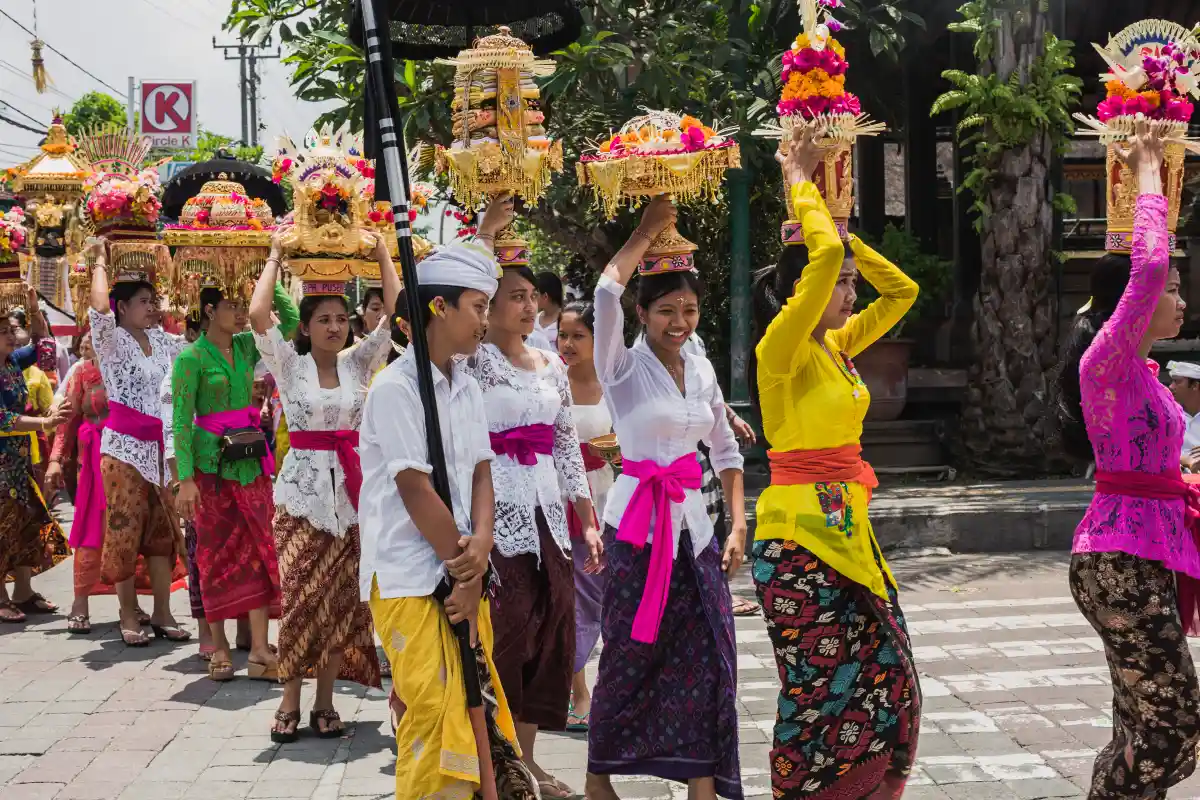
During the days that follow, people visit relatives and exchange blessings, an embodiment of unity and social harmony. Finally, on Kuningan, yellow rice and tamiang (decorative circles made of young coconut leaves) are offered, symbolizing protection and balance.
Read also : Bali Offerings : Canang Sari, Significance & Meanings
How Locals Prepare
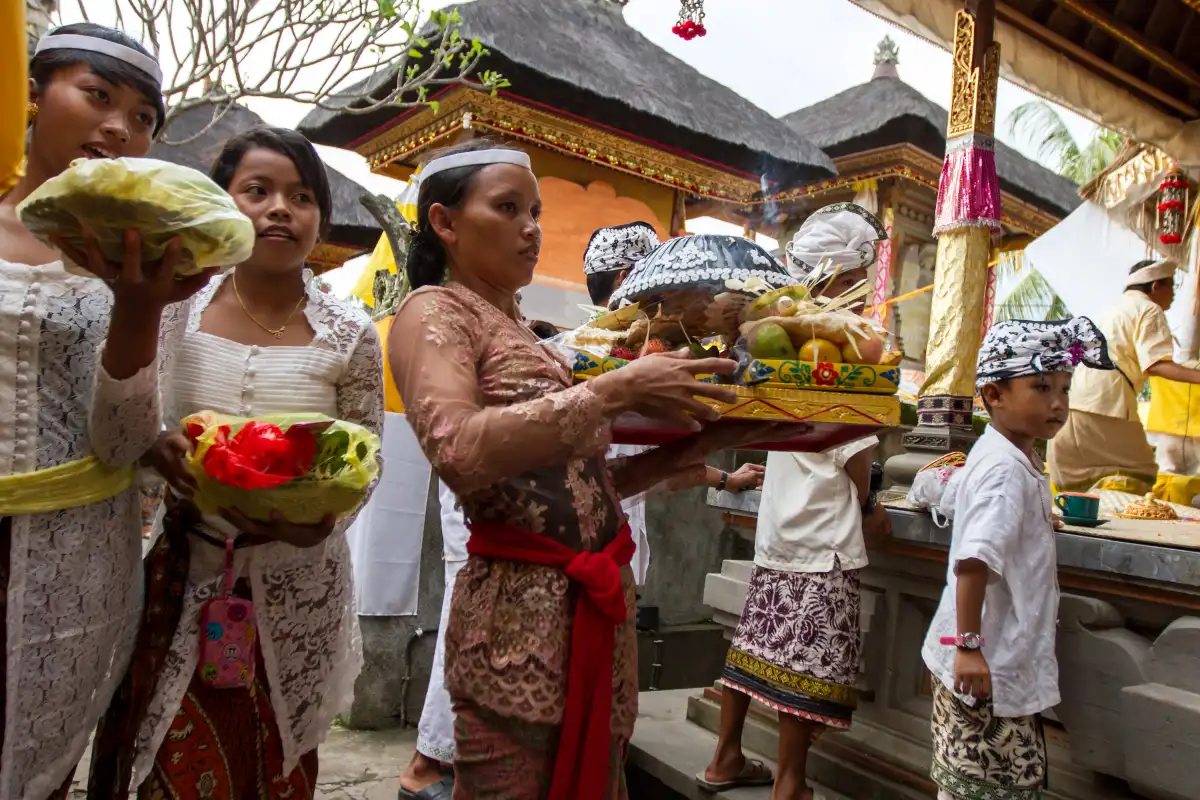
Preparation for Galungan begins days in advance. Balinese households become a whirlwind of activity: cleaning, cooking, and crafting offerings. Women intricately weave palm leaf decorations, while men prepare the penjor. Families dress in their finest traditional attire and gather to make banten, or ceremonial offerings, which are arranged with meticulous care.
The days leading up to Galungan also include several preparatory rituals:
- Sugihan Jawa – cleansing of the mind and spirit.
- Sugihan Bali – purification of the environment.
- Penampahan Galungan – symbolic victory over negative energy through sacrifice.
This period reflects not only devotion but also the Balinese value of gotong royong community cooperation. It’s a reminder that spirituality in Bali isn’t an isolated practice but a collective experience.
Visiting Bali During Galungan
If you’re visiting Bali during Galungan, you’re in for an unforgettable experience. The island transforms into a landscape of devotion and beauty-streets lined with penjor, temples buzzing with activity, and locals dressed in traditional white and gold attire.
As visitors, we can feel the deep reverence and joy that surround the island. It’s not just about witnessing the rituals; it’s about sensing the spiritual energy that binds the Balinese people together. Travelers often find themselves moved by the warmth of families inviting them to observe ceremonies or share in festive meals.
Many temples, such as Pura Besakih or Tirta Empul, become especially vibrant during this time. It’s a chance to learn about Balinese Hinduism in its purest form alive, rhythmic, and deeply heartfelt.
Etiquette for Tourists
For those wishing to observe or participate respectfully, a few guidelines go a long way:
- Dress modestly. Wear a sarong and sash when entering temples.
- Be mindful of ceremonies. Avoid interrupting prayers or taking photos too close.
- Respect offerings. Never step over or touch canang sari (small offerings) placed on the ground.
- Ask before joining. Many families welcome tourists to observe, but always request permission first.
By showing respect and curiosity, visitors can connect more meaningfully with the Balinese way of life.
The Meaning Beyond the Celebration
Galungan is more than a festival; it’s a living expression of the Balinese philosophy Tri Hita Karana, the harmony between people, nature, and the divine. It reminds us to find balance, not only within our communities but within ourselves.
For cultural travelers and expats, Galungan offers an intimate window into how Bali sustains its spiritual identity amidst modernity. It’s a celebration that invites reflection, gratitude, and reconnection with what truly matters.
Read also : Balinese Hinduism – The Heart of Bali’s Spiritual Soul
Experience Bali’s Cultural Essence with the Bali Institute
At Bali Institute, we believe that travel is most meaningful when it deepens understanding and fosters connection. We design customized group tours that highlight Bali’s authentic and sustainable cultural experiences from witnessing festivals like Galungan to engaging with local artisans and communities.
Our programs include:
- Teen Exploration, for student groups seeking an adventurous way to learn and grow during summer programs.
- University Experience, crafted for college students and faculty who want to bring learning outside the classroom and even earn academic credits.
- Customized CSR Group Tours, ideal for companies seeking ESG-based retreats that focus on sustainability, community empowerment, and positive impact.
Join us to explore the soul of Bali through meaningful travel where every journey becomes a celebration of connection, learning, and giving back.