The Balinese cremation ceremony known locally as Ngaben, is one of the most profound expressions of spirituality in Bali. While its vibrant visuals often capture global attention, the ceremony’s true essence lies in its role as a liberating rite of passage. In this guide, WE explore the meaning behind Ngaben, the steps involved, how communities prepare, and what respectful behavior looks like for visitors who wish to witness this important cultural event.
What Is Ngaben?
Ngaben is a Hindu Balinese cremation ritual designed to release the soul (atma) from the physical body so it can continue its journey toward rebirth. Unlike funeral practices in many parts of the world, the ceremony is not mournful. Instead, it is a celebration of the soul’s freedom, an energetic, communal moment that reflects the Balinese belief in harmony between the seen (sekala) and unseen (niskala) worlds.

Purpose and Spiritual Philosophy
At its heart, Ngaben is an act of spiritual liberation. WE often explain to visitors that Balinese Hinduism views the human body as a temporary vessel. The goal of life is to refine the soul through moral actions, rituals, and devotion. Death marks a transition, an opportunity for the soul to move closer to moksha (ultimate liberation).
Several core beliefs shape this ceremony:
- The body is impermanent, while the soul continues through cycles of reincarnation.
- Fire is purifying, serving as the transformative element that returns the body to its cosmic origin.
- Rituals guide the soul, ensuring it does not linger in the physical world and can move peacefully into the next realm.
Ngaben is deeply symbolic, blending art, spirituality, community, and cosmology in a way that reflects the unique identity of Balinese Hindu culture.
Read also : Balinese Hinduism – The Heart of Bali’s Spiritual Soul
The Ngaben Process: Stages From Preparation to Cremation
1. Preparation Period
Preparations for Ngaben can take weeks or even months. Families collaborate with banjar (village communities) and temple specialists to craft offerings, build effigies, and organize logistics.
Key elements include:
- Wadah or bade: a tall, decorated cremation tower used to transport the body.
- Lembu: an animal-shaped sarcophagus—often the form of a bull or mythical creature.
- Offerings (banten): symbolic items representing gratitude, purification, and guidance for the soul.
2. The Bade Tower and Transport Procession

On the day of the ceremony, the body is placed inside the bade, which is carried by dozens of men from the family and banjar.
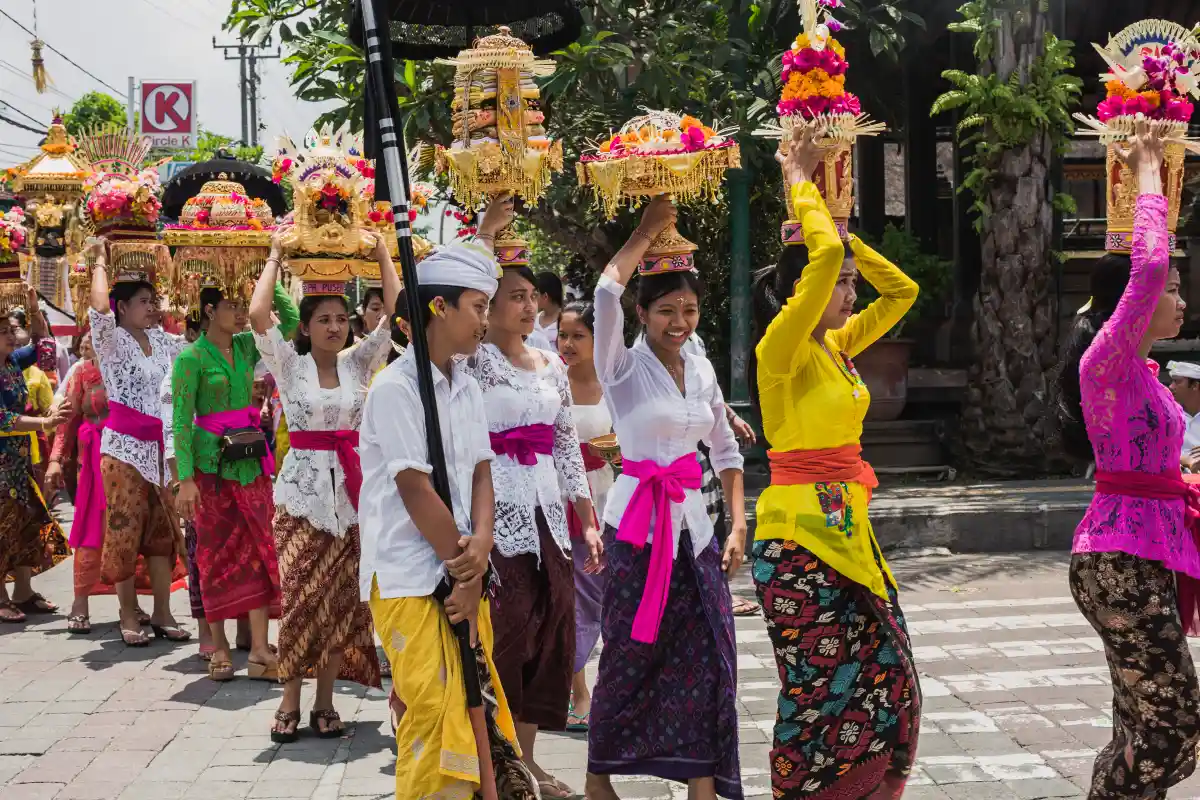
The procession is lively with gamelan music, chanting, and coordinated movements create an atmosphere of sacred energy. The tower is often rotated at intersections to confuse negative spirits, a gesture grounded in Bali’s metaphysical worldview.
3. Cremation Ritual
Upon arriving at the cremation grounds, the body is transferred into the lembu. Priests lead prayers, offerings are placed, and families present symbolic tokens of farewell.
Finally, the sarcophagus is set alight, allowing fire to return the body’s elements to nature. The ashes are later collected and released into the ocean or a sacred river, symbolizing unity with the universe.
Royal vs. Common Ngaben Ceremonies
The philosophical meaning remains consistent across all social levels, but the scale differs.
Royal Ngaben
- Known for massive towers, intricate gold detailing, and elaborate rituals.
- Involves hundreds of participants and is considered a major cultural event.
- Preparations can take months or years, reflecting the historical significance of royal families.
Community or Family Ngaben
- Simpler in scale, yet equally meaningful.
- Costs are shared among family and community members to ease the financial burden.
- Increasingly, mass Ngaben (shared cremation events) are organized to support families and reduce expenses.
Despite these differences, every Ngaben emphasizes devotion, harmony, and the release of the soul into its next spiritual cycle.
Cost and Community Involvement
Ngaben can be expensive due to effigy construction, offerings, music, and priestly services. WE often remind cultural learners that the cost is not merely a financial matter, it’s an expression of honor toward the deceased.
Support from the banjar ensures that no family undergoes this ceremony alone. This shared responsibility reflects the Balinese philosophy of gotong royong, or mutual cooperation.
Mass cremations have also become more common, enabling multiple families to share resources while preserving the ritual’s spiritual integrity.
Visitor Etiquette: How to Observe With Respect
Ngaben is open to visitors, but respectful behavior is crucial.

Dress Properly
Wear traditional ceremonial attire if possible:
- Sarong (kain)
- Sash (selendang)
- Respectful tops that cover shoulders
Black clothing is avoided, as the ceremony celebrates liberation rather than mourning.
Maintain Distance
Stay behind the family members unless invited closer.
Respect the sacred zones and follow guidance from locals or leaders of the banjar.
Photography With Permission
Photography is allowed but must be done sensitively.
Always ask a family member or ceremony organizer before taking close-up photos of the deceased, priests, or offerings. Never disrupt rituals for a better angle.
Move Mindfully
Avoid stepping over offerings, interrupting priestly rituals, or standing higher than the ceremonial items.
Read also : Things to Keep in Mind : 10 Important Do’s and Don’ts in Bali
Sustainable and Modern Adaptations
In recent years, communities in Bali have explored eco-conscious adaptations without compromising ritual meaning. These may include:
- Using biodegradable materials for effigies and offerings
- Reducing plastic decorations
- Organizing shared cremation events to minimize resource use
- Supporting artisans who produce eco-friendly ceremonial components
Modern adaptations demonstrate how Balinese culture continues to evolve while honoring ancestral values.
Why Ngaben Matters in Balinese Hindu Belief
Ngaben is more than a funeral ritual, it is a profound cultural anchor. We see it as an expression of the Balinese worldview where life, death, and rebirth flow together in a cosmic cycle. The ceremony strengthens communal unity, reaffirms spiritual teachings, and ensures the soul’s journey continues in harmony.
For culture enthusiasts and anthropology students, witnessing Ngaben offers rare insight into how ritual, art, devotion, and community coexist in Bali’s daily life.
Ngaben remains one of the most striking examples of Bali’s living heritage. Its vibrant procession, layered symbolism, and communal unity reveal a culture that honors both the physical and spiritual realms. For visitors who observe respectfully, the ceremony offers a deeper understanding of what makes Bali’s cultural landscape so remarkable.
Experience Bali’s Culture Through Meaningful Group Programs
At Bali Institute, we design customized group tours that highlight the island’s sustainable and cultural essence. Our programs focus on eco-conscious travel, nature preservation, and community empowerment, ensuring that every trip contributes positively to Bali’s people and environment.
Join our Teen Exploration programs for students seeking adventure and meaningful learning, or participate in our University Experience programs that take education beyond the classroom while earning academic credits. Adult Learning Journey programs for communities looking to immerse in a cultural infused itinerary, and we offer Customized CSR Group Tour Programs designed for company outings or ESG-focused excursions that combine sustainability with team-building impact.
Experience Bali not just as a tourist, but as a conscious traveler.