Travel can do more than reduce its negative footprint. At its best, it can create opportunities to learn from a place, strengthen local livelihoods, and contribute to the long-term well-being of communities and ecosystems. This is the idea behind regenerative travel.
While sustainable tourism often focuses on minimizing harm, regenerative tourism asks a broader question: how can travel support the health of the places we visit? In Bali, this approach becomes especially meaningful when travelers move beyond major tourism centers and spend time learning directly from communities.
East Bali offers an exceptional living classroom for this philosophy. From the active agricultural terraces of Sidemen to the coastal conservation efforts in Amed, the region clearly demonstrates the vital connections between rural livelihoods, culture, and environmental health. By moving away from the island’s congested tourist centers, academic cohorts can engage in authentic global citizenship education, turning a journey into a place-based learning experience that directly benefits local Balinese communities.
What Makes East Bali a Valuable Place for Regenerative Travel?
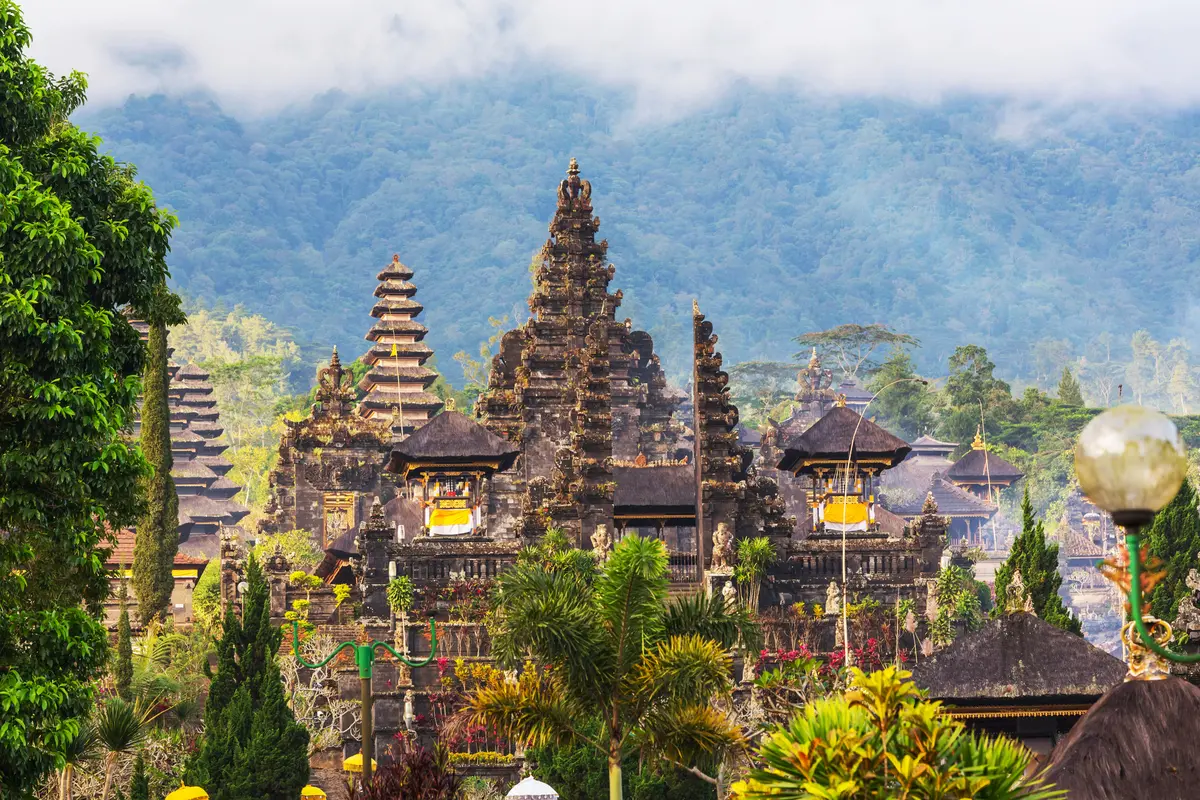
Karangasem Regency in East Bali includes farming valleys, coastal settlements, traditional villages, temples, and communities where livelihoods continue to depend closely on natural resources.
Instead of treating these landscapes simply as attractions, regenerative travel encourages visitors to understand the systems behind them.
Beyond Sustainable Tourism
Sustainable travel often emphasizes reducing waste, conserving resources, and limiting environmental damage. These remain important, but regeneration moves the conversation further.
A regenerative experience may consider:
- whether local people help determine how tourism operates;
- whether cultural knowledge remains under community control;
- whether visitor spending reaches local businesses and practitioners;
- whether environmental initiatives have long-term goals; and
- whether relationships continue beyond a single visit.
Bali Institute’s guide to regenerative tourism in Bali explores this shift from simply reducing impact toward contributing more intentionally to the places we visit.
Learning Experiences with Local Communities
One of the most valuable aspects of East Bali sustainable travel is the opportunity to learn about everyday systems that connect people, culture, and place.
1. Village-Based Agriculture in Sidemen
Sidemen’s agricultural landscape provides a starting point for understanding how farming, water, community cooperation, and local livelihoods intersect.
Rather than viewing rice fields simply as scenery, students can ask deeper questions. How is water shared? Who makes decisions about agricultural resources? How do farming families respond to changing economic and environmental conditions?
These questions connect naturally with Bali’s broader subak tradition and provide useful perspectives for students studying sustainability, anthropology, agriculture, or development.
2. Coastal Heritage in Amed
Along East Bali’s coast, communities around Amed have histories connected to fishing, marine resources, and traditional salt production.
Learning about these livelihoods can help visitors understand that a coastline is more than a recreational space. It can also be a workplace, cultural landscape, and source of community identity.
This perspective encourages travelers to think more carefully about how tourism affects coastal communities and local ecosystems.
3. Learning from Artisan Communities
East Bali is also home to communities where craft knowledge continues through generations.
A meaningful workshop should be more than an opportunity to make a souvenir. Visitors can learn about materials, techniques, cultural meanings, changing markets, and the economic realities facing artisans.
The same approach can be seen in Bali Institute’s exploration of the woodcarvers of Mas Village, where craftsmanship is considered in relation to cultural knowledge and local livelihoods.
How to Choose Responsible Regenerative Experiences
Not every activity described as “regenerative” necessarily creates meaningful benefits.
Before participating, educational groups can look for several practical indicators:
- Community involvement: Are local people involved in designing and leading the experience?
- Fair compensation: Are guides, farmers, artisans, and hosts paid appropriately?
- Appropriate group sizes: Can the experience take place without overwhelming the community?
- Long-term partnerships: Does the organizer maintain ongoing relationships instead of arranging one-off visits?
- Clear outcomes: Are environmental or social benefits explained specifically rather than through broad marketing claims?
Travel logistics matter too. Shared transportation, refillable water bottles, responsible waste management, and carefully planned itineraries can reduce unnecessary pressure while allowing more time for meaningful engagement.
What Visitors Can Learn from East Bali
Perhaps the most important lesson is that regeneration is not a single activity.
It is a relationship.
Travelers become temporary participants in places where other people live, work, worship, farm, and build their futures. Regenerative travel asks visitors to recognize that relationship and consider their role within it.
For students, that creates valuable questions for reflection:
Who benefits from our visit? What knowledge are we receiving? What are we contributing? What should remain protected? And what could continue after we leave?
These questions transform tourism into a form of experiential education.
Bali Institute works with universities to create customized faculty-led University Experiences connecting academic themes with field visits, community engagement, cultural learning, and real-world case studies. Programs can explore areas including ecology, sustainable development, social entrepreneurship, culture, and anthropology.
For universities exploring regenerative tourism or community-based learning, East Bali can become much more than a destination. It can become a living classroom where students learn how sustainability depends on relationships between people, place, culture, and long-term responsibility.