The Balinese language offers far more than basic communication; it is a direct gateway into the island’s complex social structures, traditions, and cultural values. For institutions designing custom faculty-led study abroad programs or group student trips, introducing participants to local linguistic nuances is a vital component of global citizenship education. In Bali, language is deeply tied to etiquette; vocabulary shifts dynamically based on social setting, age, and relationships, providing a real-world case study in respect, humility, and community connection.
While Indonesian serves as the national lingua franca, the indigenous Balinese language remains the heartbeat of local identity and ceremonial life. For academic cohorts and mindful travelers engaging in experiential learning abroad, moving beyond basic tourist interactions to grasp local greetings and linguistic customs is essential. It transforms a standard visit into a respectful, reciprocal cultural exchange, allowing participants to connect authentically with the communities that sustain Bali’s rich heritage.
The Role of Balinese Language in Everyday Life
The Balinese language is spoken alongside Indonesian and continues to play an important role in everyday communication. It is commonly used among families, village communities, religious ceremonies, traditional gatherings, and cultural activities.
Beyond conversation, the language carries knowledge and traditions that have been passed down through generations. It appears in prayers, storytelling, songs, performing arts, and ceremonial expressions, helping preserve Bali’s cultural memory.
For many Balinese people, language is closely connected to identity. The words used, the way they are spoken, and the context in which they are shared can reflect relationships between family members, elders, community members, and guests.
Understanding this connection helps visitors recognise that learning a few local words is not simply about communication, it is also about respecting the culture behind them.
Understanding Balinese Language Levels and How to Speak Respectfully in Bali
One important aspect of the Balinese language is its use of different speech levels. Similar to other languages that reflect social relationships, Balinese words and expressions can change depending on age, familiarity, social position, and the level of respect between speakers.
Understanding these speech levels is an important part of learning Balinese language basics and practising proper Balinese etiquette, especially when interacting with elders, joining cultural activities, or visiting traditional communities.
Basa Bali Alus (High Balinese)
Basa Bali Alus is the most respectful form of Balinese speech. It is commonly used in formal situations, religious ceremonies, traditional gatherings, or when speaking with elders and respected members of the community.
Basa Bali Madya (Middle Balinese)
Basa Bali Madya is a polite and neutral level of speech used in everyday conversations where respect is still expected. It is often used when communicating with people who are not close friends but with whom a respectful relationship is maintained.
Basa Bali Biasa (Everyday Balinese)
Basa Bali Biasa is the more casual form of Balinese used among close friends, family members, and people with familiar relationships. It is more relaxed but still depends on the social context.
For visitors learning how to speak Balinese, knowing when to use different speech levels is often more important than speaking perfectly. When unsure, using simple polite expressions such as Om Swastiastu, Suksma, or Ampura is always appreciated. Respect, intention, and awareness of local customs are the most important parts of meaningful cultural exchange.
Read more: 7 Commonly Used Indonesian & Balinese Phrases in Bali
Useful Balinese Greetings and Everyday Phrases
Learning a few basic Balinese phrases can make everyday interactions in Bali feel more welcoming and meaningful. Even a simple greeting or expression of gratitude shows respect for the local culture and demonstrates an effort to connect with the community.
Some common Balinese greetings and words for tourists include:
- Om Swastiastu: A respectful greeting commonly used when meeting someone, especially in cultural, formal, or religious settings.
- Rahajeng Semeng: A way to say “good morning” when greeting someone earlier in the day.
- Suksma / Matur Suksma: Meaning “thank you,” these expressions are used to show appreciation and gratitude.
- Ampura: Used to say “excuse me” or “sorry,” especially when apologising or politely getting someone’s attention.
- Kenken Kabare?: A casual way to ask “How are you?” when having a friendly conversation.
As a visitor, you don’t need to learn many words to make a positive impression. Using even one or two Balinese phrases for tourists with the right intention can create warmer interactions and show appreciation for Balinese culture and etiquette.
Tips for Pronouncing Balinese Words
Learning how to speak Balinese pronunciation does not need to be perfect. Locals generally appreciate the effort and intention behind using their language.
A few pronunciation tips:
- The letter c is usually pronounced like “ch”.
- The sound ng is similar to the ending sound in the English word “sing”.
- The sound ny is similar to the “ny” sound in “canyon”.
- Speak slowly and clearly rather than trying to copy a local accent immediately.
Most importantly, focus on using words with the right attitude. In Balinese culture, respectful communication is often valued more than perfect pronunciation.
Language Etiquette for Visitors in Bali
Using local language comes with understanding the cultural context behind it. The Balinese language is closely connected to respect, so visitors should approach it thoughtfully.
When using Balinese greetings and phrases:
- Use respectful expressions when visiting temples, homes, villages, or cultural spaces.
- Avoid using words as jokes or imitating accents, as language is connected to identity and heritage.
- Ask locals if you are unsure about pronunciation or meaning.
- Use simple phrases naturally rather than forcing unfamiliar expressions.
If you are uncertain, a polite Indonesian greeting is always acceptable. What matters most is showing willingness to communicate respectfully.
Why Learning Balinese Phrases Enhances Your Experience in Bali
Learning a few Balinese phrases for tourists can create more meaningful interactions during your visit. Simple expressions such as Suksma (thank you) or Om Swastiastu (a respectful greeting) can show appreciation for local customs and help create a warmer connection with the people you meet.
The Balinese language offers visitors a deeper understanding of the island beyond its famous attractions. Through everyday greetings and conversations, travellers can discover the values of respect, humility, and community that are deeply connected to Balinese culture.
For those interested in responsible cultural tourism in Bali, learning basic Balinese words and phrases is a simple way to engage more respectfully with local communities. It reflects curiosity, cultural awareness, and a willingness to appreciate Bali as a living society with its own traditions, language, and identity.
Preserving the Balinese Language as Part of Bali’s Cultural Heritage
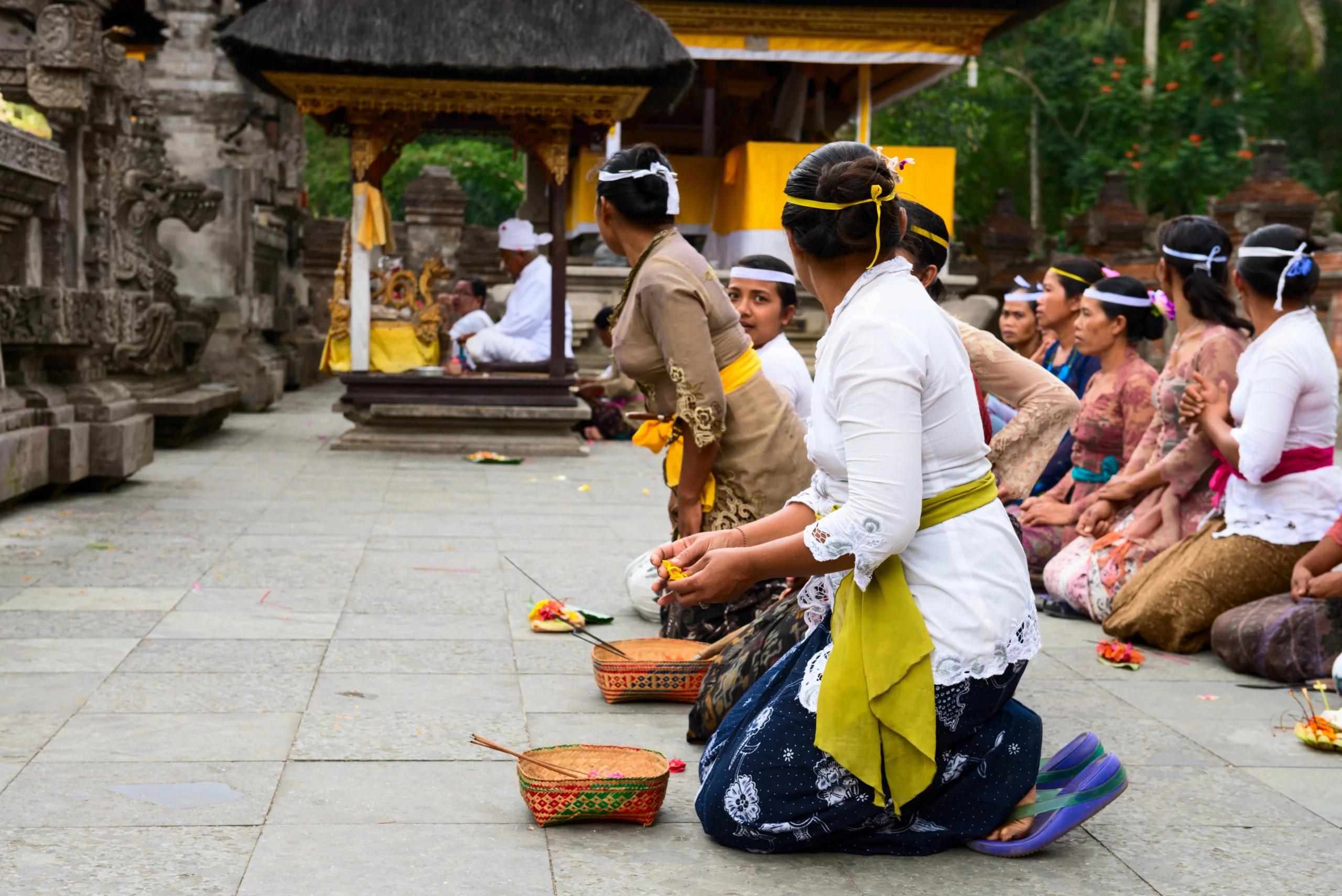
The Balinese language remains an essential part of cultural preservation in Bali because it carries more than words, it preserves stories, traditional knowledge, ceremonies, and values that have been passed down through generations.
Like many local languages around the world, Balinese continues to thrive when it is actively used in everyday life. Families, communities, cultural practitioners, and younger generations all play an important role in keeping the language connected to Bali’s evolving identity.
Learning and appreciating Balinese words and phrases is one way to support the preservation of this living heritage. Responsible travel is not only about protecting Bali’s natural landscapes or visiting cultural landmarks, but also about respecting the language, traditions, and knowledge systems that make the island unique. By engaging with the Balinese language and culture in a thoughtful way, travellers become part of a cultural exchange that values understanding, respect, and the continuation of local heritage.
Frequently Asked Questions
What language do people speak in Bali?
The main languages spoken in Bali are Balinese and Indonesian. Indonesian is commonly used for daily communication, while the Balinese language remains an important part of family conversations, village life, religious ceremonies, and cultural activities.
Is Balinese language difficult for tourists to learn?
Learning the Balinese language does not require fluency to make a positive impression. Visitors can start with simple Balinese greetings and phrases such as Om Swastiastu (a respectful greeting), Suksma (thank you), and Ampura (excuse me or sorry).
What is the most respectful Balinese greeting?
Om Swastiastu is one of the most respectful Balinese greetings and is commonly used when meeting people, especially in cultural, formal, and religious settings.
Why should tourists learn Balinese phrases?
Learning a few Balinese phrases for tourists is a meaningful way to show respect for local customs and connect with Balinese communities. Simple words can help create warmer interactions and demonstrate appreciation for the island’s culture.
Can tourists speak Balinese in Bali?
Yes. Many Balinese people appreciate visitors who make an effort to use local words, even if the pronunciation is not perfect. When learning how to speak Balinese, showing respect and genuine interest is more important than speaking flawlessly.
Learn Bali Through Language and Cultural Immersion with Bali Institute
Language is the most direct pathway to understanding a culture’s worldview. At Bali Institute, we serve as your strategic educational collaborators, designing experiential learning abroad that moves beyond surface-level tourism to facilitate authentic linguistic and cultural exchange. We do not offer off-the-shelf packages; instead, we custom-build every itinerary so your participants engage respectfully with local communities.
Whether you are seeking a Teen Exploration program that introduces youth to Balinese etiquette, a University Experience that operates as a custom faculty-led study abroad program exploring anthropology and sociolinguistics, a reflective Adult Learning Journey, or Customized CSR Group Tours for organizations dedicated to responsible community engagement, we tailor the journey to your exact goals. Partner with us to ensure your group gains a profound, lived appreciation for Bali’s living heritage and the traditions that connect generations.