The Soul of Bali Woven in Fabric
When we think of Bali, images of emerald rice terraces, temple ceremonies, and graceful dancers often come to mind. Yet, what truly completes this spiritual landscape is the traditional Balinese clothing, a living expression of devotion, community, and identity. Each layer, knot, and color carries deep meaning, passed down through centuries of tradition.
As travelers who have immersed ourselves in Balinese culture, we’ve learned that wearing traditional clothing here isn’t just about fashion, it’s about respecting a sacred way of life. Whether you’re attending a temple ceremony, joining a local festival, or simply capturing cultural portraits, understanding the meaning behind Balinese attire allows you to connect more authentically with the island’s soul.
Overview of Traditional Attire
Balinese traditional clothing reflects harmony between spiritual values and aesthetic beauty. The styles and symbols differ slightly by region and occasion, but the essence remains the same, balance and respect.
At the core of every Balinese outfit lies simplicity in form, yet depth in meaning. The main components typically include:
- Kebaya: A fitted blouse worn by women, often crafted from lace or sheer fabric.
- Kamen or Sarong: A long piece of cloth wrapped around the waist, worn by both men and women.
- Udeng: A headcloth folded into a distinct triangular style, symbolizing clarity of mind and balance.
Each element embodies layers of cultural philosophy, from the way the fabric wraps the body to the colors that represent purity, strength, or humility.
Men vs Women Clothing
In Bali, men and women’s attire differ not only in form but also in spiritual function.
Women’s Clothing: Grace and Devotion
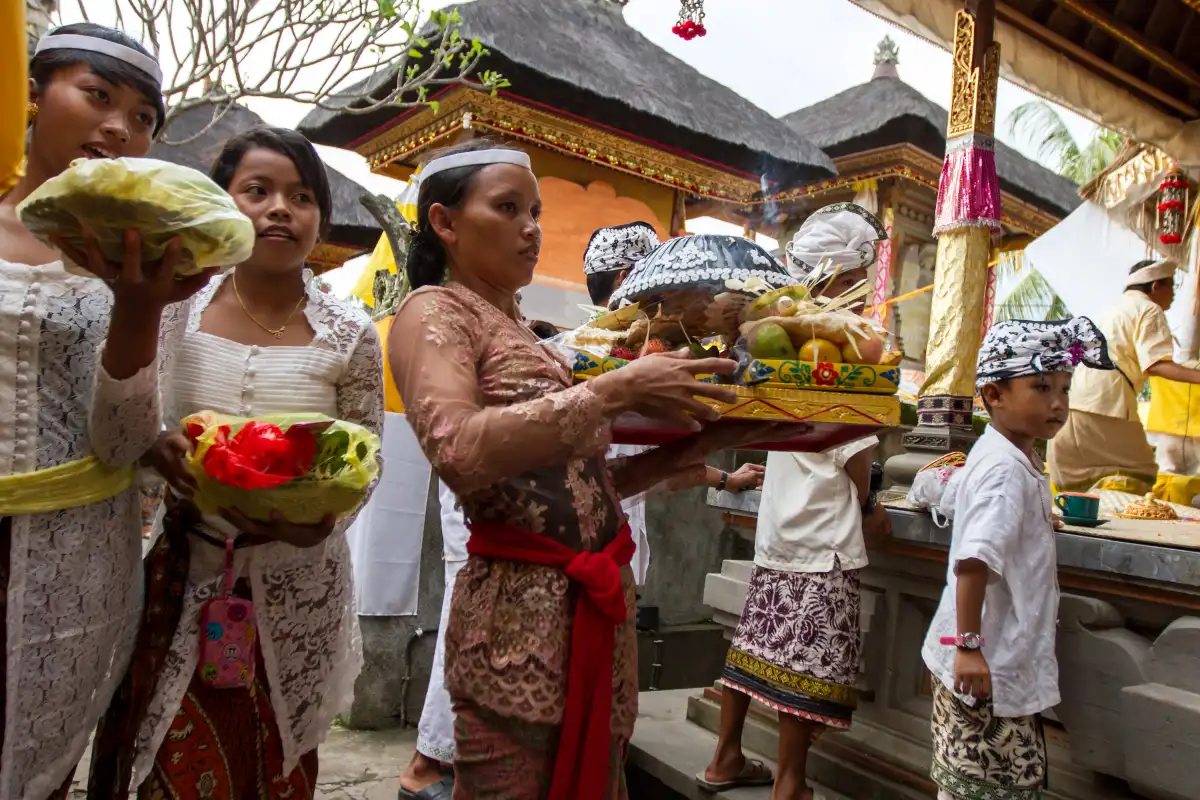
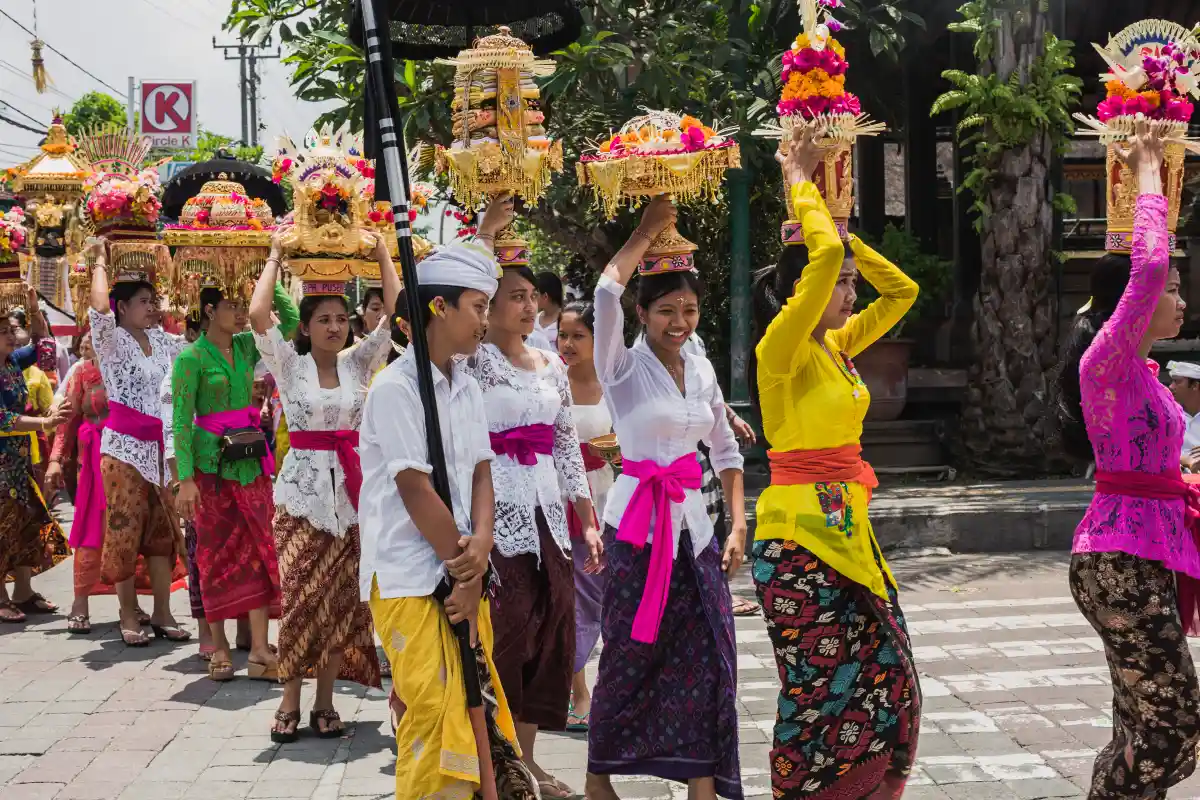
Balinese women often wear a kebaya paired with a kamen and a selendang (sash). The sash, tied around the waist, signifies self-control, a reminder to balance physical and spiritual desires. During ceremonies, women may add fresh flowers to their hair, representing offerings to the gods.
Colors also hold significance. White is worn during temple ceremonies to symbolize purity, while gold or vibrant tones appear during festive events.
Men’s Clothing: Strength and Purity
Men’s clothing centers on the kamen, saput (outer cloth), udeng, and saput poleng, a black-and-white checkered cloth representing the duality of good and evil. The udeng, worn neatly on the head, represents spiritual focus.
Unlike women’s attire, men’s outfits are designed to be more practical, allowing them to participate actively in temple duties or processions while maintaining a dignified appearance.
When and How It’s Worn
Wearing traditional attire in Bali is both a cultural heritage practice and an act of reverence.
During religious ceremonies such as Galungan, Kuningan, or temple anniversaries (odalan), every Balinese, from children to elders, dresses in traditional clothing. The garments help cultivate a mindset of respect before entering sacred spaces.
As visitors, we should approach this tradition with the same sensitivity. When attending temple ceremonies:
- Always wear a sarong and sash (available for rent or purchase near temples).
- Avoid bright or flashy accessories that may distract from the sacred environment.
- Cover shoulders and knees as a sign of respect.
Embracing these practices allows us to participate meaningfully, not just as observers, but as guests honoring the Balinese way of life.
Read also : 5 Biggest Celebrations and Religious Festivities in Bali
Where to Buy Authentic Pieces
If you’d like to bring home your own piece of Balinese tradition, there are many local artisans and workshops across the island producing authentic garments.
1. Ubud Traditional Market
A treasure trove for handwoven sarongs and kebayas made by local craftspeople. Ideal for those who appreciate artistry and want to support local economies.
2. Sukawati Art Market
One of the oldest and most vibrant markets in Bali. You’ll find affordable kamen and udeng options, perfect for travelers preparing to visit temples or ceremonies.
3. Boutique Designers in Seminyak and Denpasar
Modern Balinese designers blend traditional fabrics with contemporary cuts, creating pieces that are elegant yet rooted in culture.
Read also : 9 Tips for Sustainable Products Shopping in Bali : Eco-Conscious Traveler’s Guide
Tips for Tourists
To ensure your experience with traditional clothing is meaningful and respectful, here are a few reminders:
- Ask for guidance from locals when dressing for ceremonies, they’ll appreciate your respect and eagerness to learn.
- Buy from local artisans instead of mass-produced shops. It supports Bali’s cultural preservation and helps sustain traditional craftsmanship.
- Learn the story behind each piece. Every motif and color reflects Balinese philosophy, knowing this deepens your connection to the island.
Why Balinese Clothing Matters
For the Balinese, traditional attire is not just clothing, it’s a bridge between the human and the divine. Each garment reflects the wearer’s devotion, purity, and alignment with nature. For us as visitors, learning about and wearing these garments with reverence allows us to glimpse the island’s spiritual essence, a moment of shared respect and connection that transcends culture.
Experience Balinese Culture with Purpose
At Bali Institute, we believe that true cultural immersion goes beyond sightseeing, it’s about understanding, engaging, and giving back.
We are a premiere travel organization offering customized group tours that focus on sustainability, nature preservation, and community empowerment in Bali. Our programs include:
- Teen Exploration: Designed for student groups seeking adventure, cultural learning, and personal growth through hands-on experiences.
- University Experience: Tailored for college students and faculty who want to bring academic learning outside the classroom and earn extra credits through cultural engagement.
- Customized CSR Group Tours: Perfect for companies aiming to organize impact-driven ESG excursions that combine corporate bonding with meaningful contributions to local communities.
Through our programs, we invite you to not just visit Bali, but to be part of its living culture, one that continues to inspire and connect us all.